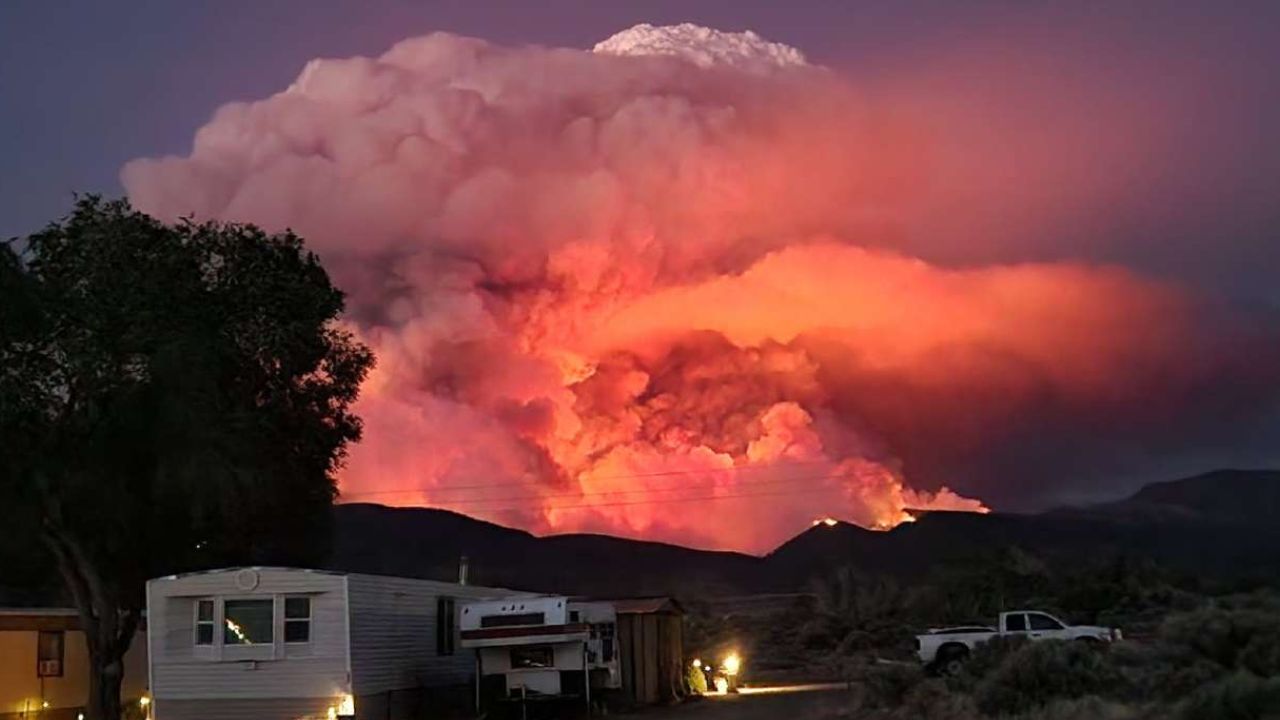
Beaver County, Utah — A rapidly growing wildfire in southern Utah has forced evacuations, shut down a major highway, and scorched more than 24,000 acres as firefighters struggle to gain control amid dangerous weather conditions.
The Cottonwood Fire, which ignited Monday afternoon in Beaver County, expanded dramatically within hours, fueled by dry vegetation, drought conditions, and powerful wind gusts reaching up to 50 mph.
Fire officials say the blaze remains a major threat to nearby communities as crews continue battling flames in difficult terrain.
Cottonwood Fire Grows Rapidly After Ignition
According to fire officials, the Cottonwood Fire began around 3:36 p.m. Monday and quickly spread across the landscape.
By Tuesday afternoon, the wildfire had consumed approximately 24,100 acres and remained 0% contained, highlighting the challenges firefighters face in stopping its advance.
Officials said the fire’s rapid growth was driven by a combination of dry fuels, extreme heat, and strong winds that pushed flames across large sections of Beaver County.
Investigators suspect the blaze may have been caused by human activity, although authorities have not yet released additional details regarding the potential cause.
Evacuation Orders Issued as Flames Threaten Communities
As fire conditions worsened Monday evening, emergency officials issued mandatory evacuation orders for residents in several threatened areas.
People living in the Eagle Point and Merchant Valley communities were instructed to leave immediately as the fire moved closer to homes and infrastructure.
Campgrounds and recreational areas were also impacted by evacuation notices as authorities worked to protect lives and property.
The fire has additionally forced the complete closure of a highway in the mountainous region, creating travel disruptions and limiting access to some affected areas.
Emergency managers continue urging residents to monitor official alerts and follow evacuation instructions without delay.
Hundreds of Wildfires Burning Across Utah
The Cottonwood Fire is just one of hundreds of active fires currently burning throughout Utah.
According to Utah Fire Info, there are approximately 344 active wildfires statewide, which together have burned more than 64,000 acres.
The widespread fire activity has stretched resources as crews battle multiple incidents across the state.
Many of the fires have been fueled by persistent drought conditions, low humidity, and strong winds that continue to create ideal wildfire conditions.
Iron Fire Remains Utah’s Largest Active Blaze
While the Cottonwood Fire has drawn significant attention because of its rapid growth, Utah’s largest active wildfire remains the Iron Fire in Juab County.
As of Tuesday morning, the Iron Fire had burned more than 31,000 acres and was only 9% contained.
The fire has triggered numerous evacuation orders, including the full evacuation of the town of Eureka, a community of more than 600 residents.
Officials said the blaze originated on private property before spreading into multiple counties and crossing onto federal land. The wildfire has also forced additional highway closures as crews work to contain its spread.
Utah Town Bans All Fireworks Just Days Before July 4 — Residents Shocked by Sudden Decision
Dangerous Fire Weather Expected to Continue
Forecasters warn that conditions remain favorable for wildfire growth throughout much of the western United States.
Before the fires erupted, the National Weather Service issued Red Flag Warnings across large portions of Utah because of heightened fire danger.
Those warnings remain in effect across parts of southern and central Utah, as well as sections of Colorado, Arizona, Nevada, and Southern California.
Meteorologists say strong winds and extremely low humidity levels could continue fueling existing fires while increasing the risk of new ignitions.
With little rainfall in the forecast and dangerous fire weather expected to persist, firefighters are preparing for another challenging stretch as they work to protect communities threatened by the growing wildfires.
Have wildfires impacted your community in recent years? What steps do you think residents and officials should take to reduce wildfire risks during extreme weather conditions? Share your thoughts respectfully in the comments below.