Big Island, Hawaii — A magnitude 4.1 earthquake rattled Hawaii’s Big Island Monday morning, adding another jolt to an area that has experienced a series of earthquakes and volcanic activity.
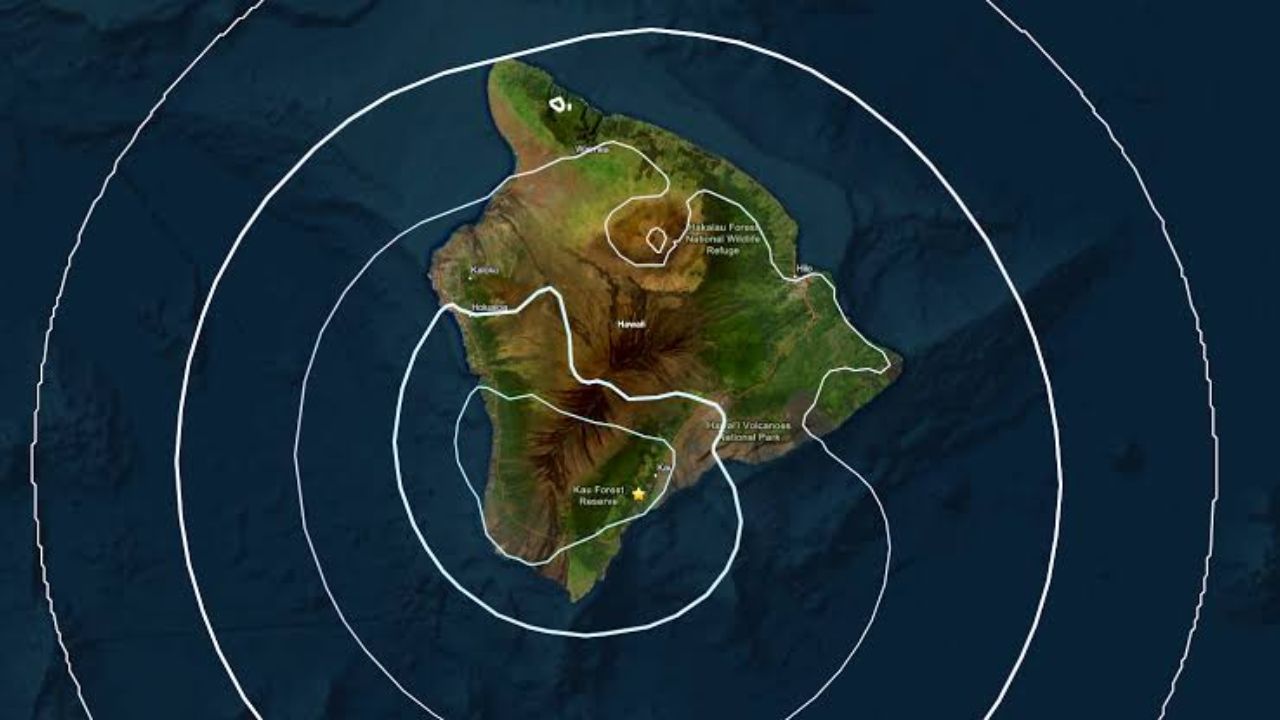
According to the U.S. Geological Survey, the earthquake struck at approximately 9:24 a.m. local time, with its epicenter located around 10 miles south-southeast of Hōnaunau-Nāpōʻopoʻo.
The earthquake occurred about 14 miles below sea level, according to USGS data. Residents across parts of the island reported feeling the shaking, although officials said there were no immediate indications of major damage.
USGS Says More Aftershocks Are Possible
The earthquake is part of continuing seismic activity across Hawaii and the broader Pacific region.
The USGS said the 4.1-magnitude quake was likely an aftershock of the magnitude 6.0 earthquake that struck May 23. Monday’s earthquake occurred in roughly the same area as that earlier, stronger event.
Officials are warning residents that additional aftershocks could occur during the coming days to weeks.
The latest earthquake is also part of the broader seismic activity associated with the Pacific Ring of Fire, one of the most active earthquake and volcanic regions on Earth.
The region experiences frequent earthquakes and volcanic eruptions because of the movement and interaction of tectonic plates beneath the Pacific.
No Tsunami Threat Reported
Despite the earthquake occurring in Hawaii, officials said there was no tsunami threat associated with the latest tremor. There were also no reports that the earthquake caused significant damage to buildings or infrastructure.
Based on the earthquake’s intensity, the USGS said substantial structural damage was unlikely.
Dozens of people reported feeling the shaking, with most reports coming from the western portion of the Big Island. A smaller number of reports also came from Maui and Oʻahu.
Mauna Loa and Kilauea Not Affected
Hawaii’s two major volcanoes, Mauna Loa and Kilauea, were also being watched following the earthquake. According to the USGS, there were no apparent impacts to either volcano from Monday’s earthquake.
The Hawaiian Volcano Observatory will continue monitoring the volcanoes and looking for any changes that could indicate increased activity.
For now, the earthquake does not appear to have triggered any significant volcanic response.
Big Island Still Recovering From Former Hurricane Lala
The latest earthquake comes as Hawaii’s Big Island is still dealing with the effects of former Hurricane Lala, which recently brought extreme rainfall to parts of the island.
Some areas received more than 2 feet of rain, resulting in extensive damage and difficult conditions.
The storm was strong enough to temporarily close Puʻuhonua o Hōnaunau National Historical Park, adding to the disruption caused by the weather event.
The combination of recent severe weather and continuing earthquakes has kept emergency officials and scientists closely focused on conditions across the island.
More Earthquakes Reported in Recent Days
Monday’s magnitude 4.1 earthquake was not the only recent tremor to strike the region.
Just days earlier, a magnitude 5.2 earthquake occurred offshore beneath an undersea volcano near Hawaii’s Big Island, according to the USGS.
That earthquake was part of a period of unrest that had reportedly begun about a week earlier.
Scientists will continue tracking the frequency, strength and locations of earthquakes to determine whether the recent activity represents a change from normal seismic patterns.
For residents, officials are encouraging people to remain aware of earthquake updates and follow guidance from local authorities. While no major damage or tsunami threat has been reported from Monday’s quake, additional aftershocks remain possible.
The USGS and Hawaiian Volcano Observatory will continue monitoring the Big Island’s seismic and volcanic activity as Hawaii recovers from its recent storm impacts.
Did you feel the earthquake or notice any shaking where you were? Share your experience in the comments below.