Block Island, Rhode Island — A routine shark research expedition off the coast of Rhode Island turned into a historic moment after marine scientists successfully tagged their first-ever hammerhead shark, offering researchers an unprecedented opportunity to study the species’ movements along the U.S. East Coast for years to come.
The milestone came during an expedition led by the Atlantic Shark Institute (ASI), whose team unexpectedly encountered multiple hammerhead sharks while conducting research on another species.
Rare Shark Encounter Surprised Researchers
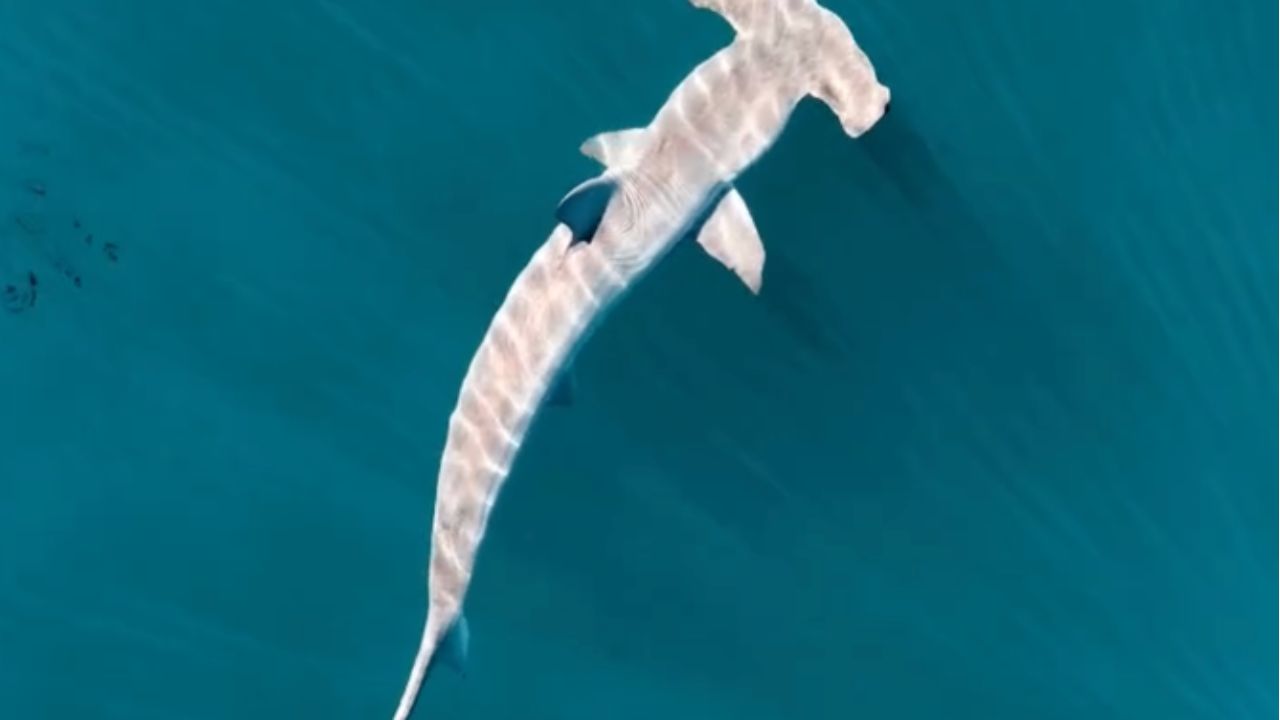
The Atlantic Shark Institute was originally searching for sandbar sharks in Southern New England waters on Friday when the crew spotted an unexpected visitor—a massive endangered scalloped hammerhead shark swimming near Block Island.
The rare sighting was captured on video by Tomas Koeck of Silent Flight Studios, whose footage showed the giant shark gliding through the clear blue Atlantic waters.
Koeck described the experience as an exciting opportunity to document one of the ocean’s most recognizable predators while highlighting the important scientific work taking place off Rhode Island’s coastline.
Researchers attempted to attract and tag the endangered scalloped hammerhead, but the shark did not take the bait and eventually swam away.
Historic First Tagging Follows Later in Expedition
Although the team missed its first opportunity, the expedition wasn’t over.
Later that day, researchers encountered another hammerhead species—a 6-foot-long female—and successfully attached a research tag, marking the Atlantic Shark Institute’s first successful hammerhead shark tagging.
According to Executive Director Jon Dodd, the achievement represents an important expansion of the nonprofit’s long-running shark research program.
Scientists hope the information collected from the tag will provide valuable insight into migration routes, habitat preferences, nursery grounds, seasonal movements, and changing residency patterns.
The institute expects the tracking device to remain active for 10 years or more, allowing researchers to follow the shark’s movements up and down the East Coast.
Warming Waters Are Bringing New Shark Species North
Dodd said changing ocean temperatures are likely contributing to the appearance of species that were once more commonly associated with warmer southern waters.
According to him, New England’s waters have become increasingly attractive to sharks that historically spent most of their time near Florida and other southern coastal regions.
The recent hammerhead sightings raise new scientific questions about how marine species are adapting as ocean temperatures continue to change.
Researchers now plan to return to the area where the sharks were spotted in hopes of locating and tagging additional hammerhead sharks for future studies.
Magnitude 4.3 Earthquake Shakes Northern California, Tremors Felt Across Bay Area
Long-Term Research Will Help Scientists Understand Shark Populations
The Atlantic Shark Institute studies numerous shark species found throughout Rhode Island and the broader New England coastline.
Over the years, researchers have tagged between 10 and 15 different shark species, using both satellite and acoustic tracking devices to gather long-term scientific data.
This week alone, the nonprofit tagged around a dozen sharks as part of its ongoing research efforts.
Dodd explained that because each tracking tag is costly, the institute focuses on collecting meaningful data by tagging multiple individuals from the same species, rather than placing single tags on many different shark species.
That approach allows scientists to build a more complete understanding of population behavior and migration trends, helping improve marine conservation efforts across the region.
With its first-ever hammerhead shark now carrying a long-term tracking tag, researchers say they are eager to learn where the animal travels next and what its movements can reveal about the changing ecosystem off the New England coast.
What do you think about this historic shark-tagging milestone? Are warming oceans changing the wildlife you’re seeing along U.S. coastlines? Share your thoughts in the comments below.