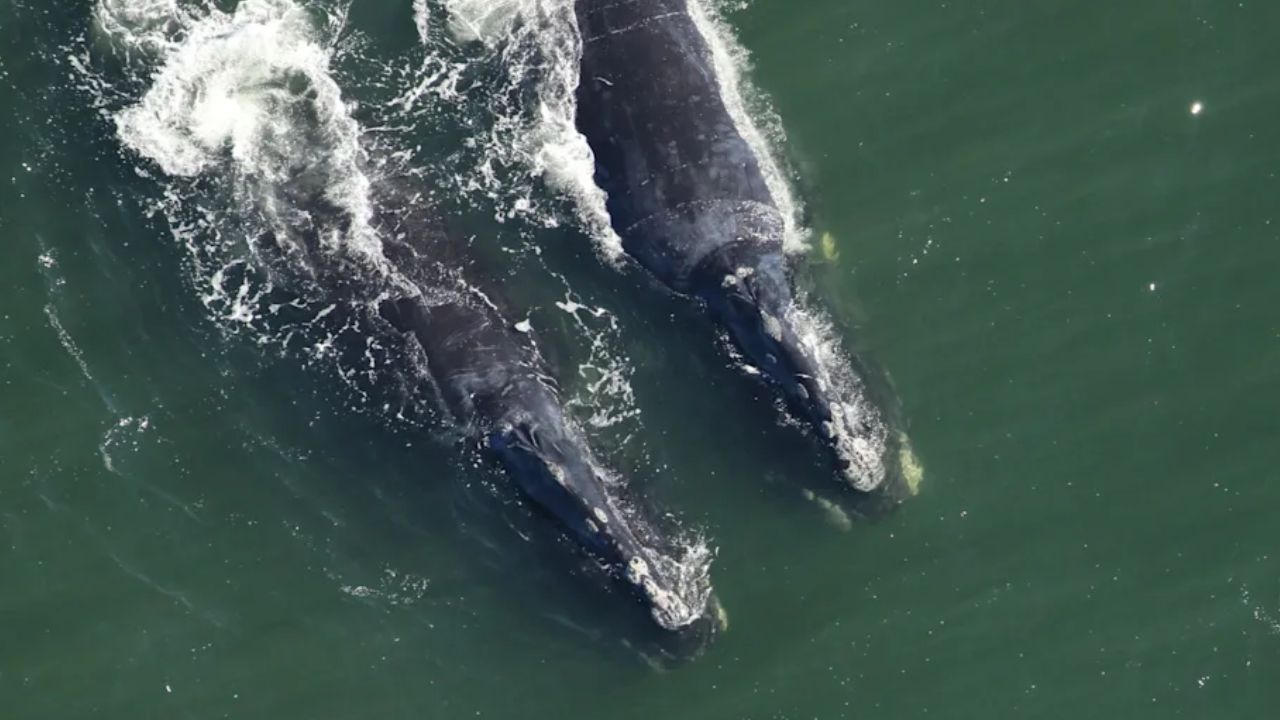
Maryland Coast — Wildlife officials are urging boaters to exercise extra caution after two endangered North Atlantic right whales were spotted off the Maryland coast, an uncommon appearance that has raised concerns because the animals were seen in one of the busiest shipping corridors along the U.S. East Coast.
The rare sighting has drawn attention from marine conservation experts, who warn that the whales face an increased risk of deadly collisions with large vessels in heavily traveled waters.
Rare Sighting Raises Safety Concerns
According to the National Oceanic and Atmospheric Administration (NOAA), the two whales were observed earlier this month in waters where commercial shipping traffic is especially heavy.
Officials say the location of the sighting is particularly concerning because North Atlantic right whales spend much of their time close to the ocean’s surface, making them highly vulnerable to passing ships.
The species is not typically found this far south during this time of year, adding to the significance of the discovery.
While the whales are known to migrate along the Atlantic coast, experts say summer sightings near Maryland remain relatively uncommon.
Fewer Than 400 Right Whales Remain
The North Atlantic right whale is considered one of the world’s rarest whale species, with NOAA’s latest population estimate placing the total at approximately 380 individuals.
Although scientists have observed three consecutive years of modest population growth, the species remains critically endangered and continues to face significant threats from human activity.
Every confirmed sighting provides researchers with valuable information about the whales’ movements, health, and habitat use.
Conservationists say protecting every remaining whale is essential to the species’ long-term survival.
Vessel Strikes and Fishing Gear Remain Biggest Threats
NOAA Fisheries identifies vessel collisions and entanglement in fishing gear as the two greatest dangers facing North Atlantic right whales.
According to the agency, about 86% of right whales become entangled in fishing gear at least once during their lifetime, often suffering severe injuries or death.
The whales can also be difficult for mariners to detect because they have dark-colored bodies, no dorsal fin, and frequently swim just beneath the water’s surface.
Poor weather, rough seas, low visibility, and murky water can make spotting them even more challenging, increasing the likelihood of accidental strikes.
Species Nearly Went Extinct
According to the New England Aquarium, commercial whaling during the late 1800s pushed North Atlantic right whales to the brink of extinction.
The species later received federal protection and has been listed as endangered under the Endangered Species Act since 1970.
Despite conservation efforts over the past several decades, scientists say the whales continue to face a fragile future because of ongoing human-caused injuries and fatalities.
Unexpected Hammerhead Shark Sighting Off Rhode Island Marks a Major Milestone in Shark Research
While their population has shown encouraging signs of recovery in recent years, experts caution that the species remains at significant risk.
Officials Ask Boaters to Report Sightings
Marine officials are encouraging anyone who spots a North Atlantic right whale to report the sighting so researchers can monitor the animals and issue alerts to nearby vessels if necessary.
For sightings between Maine and Virginia, NOAA asks the public to report observations by calling (866) 755-6622.
Officials also remind boaters to remain alert in areas where whales may be present, slow down when appropriate, and follow any temporary navigation advisories designed to reduce the risk of vessel strikes.
What do you think about stronger protections for endangered marine wildlife? Should stricter speed limits be enforced for ships in whale habitats? Share your thoughts in the comments below.