Granite Peak, Montana — What began as an ambitious one-day climb to the summit of Montana’s tallest mountain turned into a remarkable survival story after a Billings nurse was impaled by his own trekking pole nearly 12,000 feet above sea level. Instead of waiting for an emergency evacuation, he relied on his medical training, the support of his friends, and sheer determination to hike more than 10 miles back to safety.
Freak Accident Turns Routine Climb Into Life-Threatening Ordeal
David Cifaldi and two close friends set out Monday with a simple goal: reach the summit of Granite Peak and return home the same day.
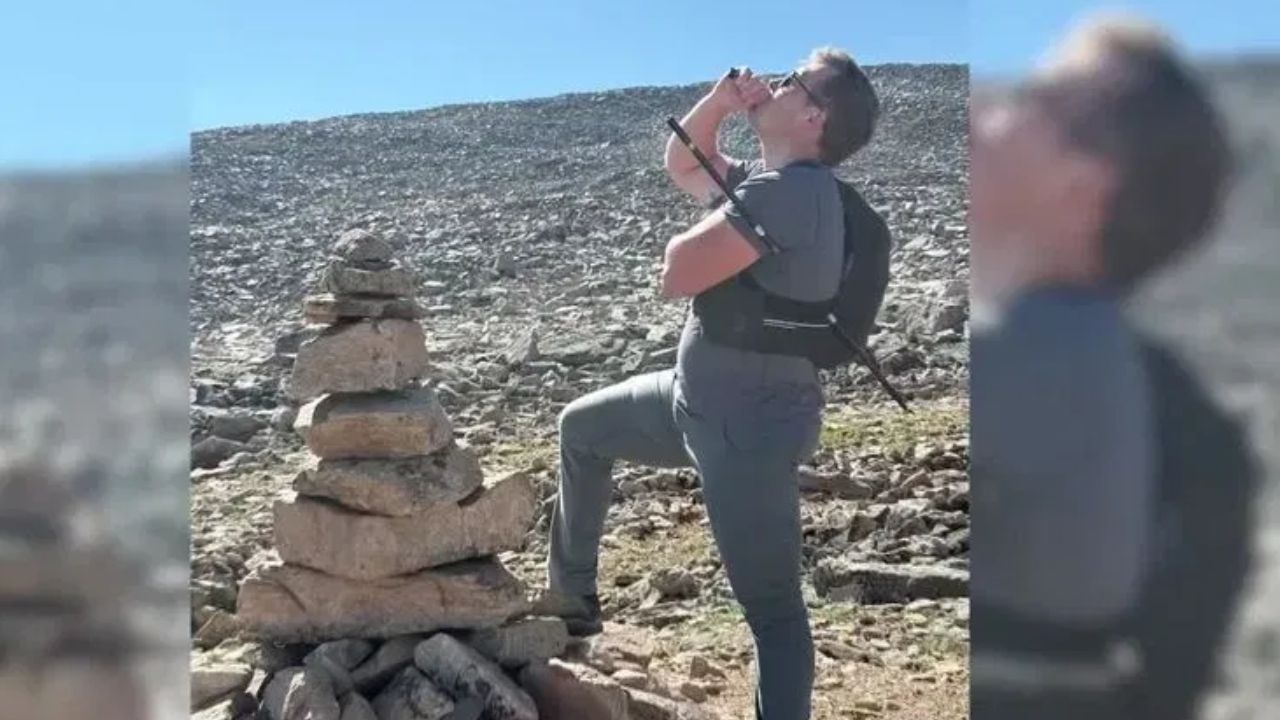
The climb was progressing as planned until Cifaldi slipped on a rock during the descent. He later described the accident as something completely unexpected.
“It was just kind of a freak thing, something you’d more expect to, like, roll your ankle versus, like, have a catastrophic injury.”
As he tried to get back up, he realized something was terribly wrong.
“As I kind of sat up, I realized that the other one was stuck in my side.”
According to a fundraiser organized by a friend, the trekking pole pierced his side, entering and exiting through his lat muscle, leaving about eight inches between the two wounds while the pole remained lodged in his body.
Calm Decision Helped Save His Life
Despite the horrifying injury, Cifaldi remained calm and immediately evaluated his condition using his medical training. His friend Brad Reich said the group quickly checked for signs of severe bleeding or breathing problems.
According to Reich, Cifaldi was still alert, talking normally, and there was no large pool of blood, giving them confidence that the injury, while serious, was not immediately fatal.
Rather than panic, the group focused on the safest way off the mountain.
Friends Called for Help as Nurse Chose to Walk
The third member of the hiking group, Jesse Ross, used a Garmin satellite communicator to notify search and rescue about the emergency.
Even after contacting rescuers, Cifaldi believed he could make it down without requiring an emergency airlift.
“I was pretty convinced at that point that I was going to get off that mountain and I was going to do it under my own power.”
That decision meant retracing more than 10 miles of rugged mountain terrain, including rocky boulder fields, lingering snow patches, and steep switchbacks—all while keeping the trekking pole lodged in his side to avoid causing further injury.
Ross said the journey required extraordinary concentration because another fall could have dramatically changed the outcome.
Illinois Contractor Swept Away by Stormwater Inside Sewer as Search Turns Into Recovery Mission
He recalled being amazed by Cifaldi’s focus and determination throughout the long descent.
Six-and-a-Half Hour Trek Ends at Hospital
After six and a half hours, the three hikers finally reached the trailhead, where Cifaldi was transported to a hospital. Doctors safely removed the trekking pole, and he is now recovering at home.
Looking back on the experience, Cifaldi said he knows how fortunate he was.
“I feel very lucky. I feel like somebody was definitely watching out for me.”
He added that just a couple of inches in another direction could have resulted in a much different outcome, expressing gratitude for his friends who stayed by his side throughout the ordeal.
The extraordinary survival story has drawn attention not only because of the unusual nature of the accident, but also because of the composure, teamwork, and determination that helped turn what could have been a tragedy into an incredible recovery.
What do you think of David Cifaldi’s decision to hike back instead of waiting for a rescue? Share your thoughts in the comments below.