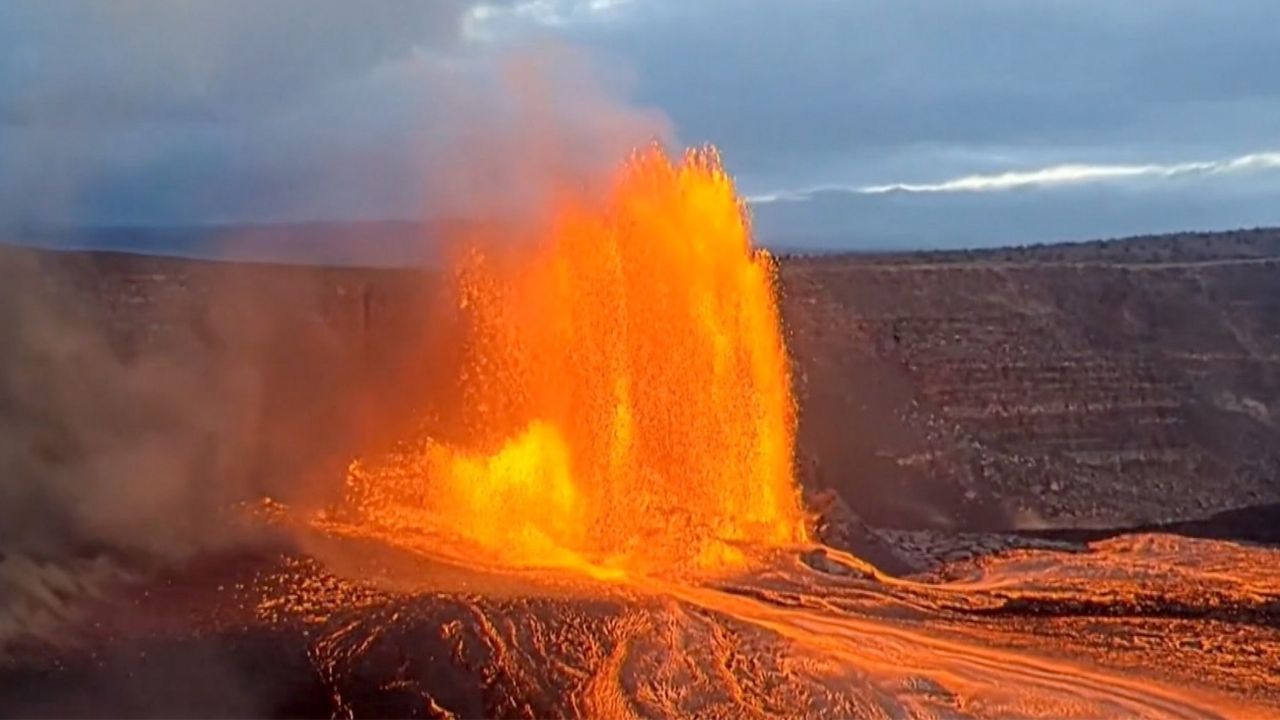
Hawaii Volcanoes National Park, Hawaii — One of the world’s most active volcanoes has erupted once again, sending towering fountains of lava and a massive plume of volcanic smoke high above Hawaii as scientists closely monitor the latest activity.
According to the U.S. Geological Survey (USGS), Episode 51 of Kilauea’s ongoing eruptive activity officially began at 8:30 a.m. Hawaii Standard Time (HST) on Wednesday, quickly producing spectacular lava fountains and widespread volcanic emissions.
Officials continue to monitor the eruption as weather conditions influence where ash and volcanic material may travel.
Lava Fountains Quickly Reached Nearly 1,000 Feet
Scientists reported that the eruption intensified rapidly after it began.
According to the USGS, lava fountains surged to approximately 950 feet in height, while molten rock was being discharged at an estimated 400 cubic yards per second.
Video released by the agency captured lava steadily pouring from Kilauea’s summit before dramatically increasing into powerful fountains that illuminated the volcanic crater.
The latest eruption marks Episode 51 in Kilauea’s current eruptive sequence, continuing the volcano’s pattern of intermittent lava-fountaining events.
Massive Smoke Plume Rose 18,000 Feet Into the Sky
As the eruption intensified, the National Weather Service (NWS) reported that the volcanic smoke plume climbed to approximately 18,000 feet above sea level.
Officials also reported light amounts of Pele’s hair—thin strands of volcanic glass created during lava fountaining—falling along Highway 11 outside Hawaii Volcanoes National Park.
The USGS noted that while lava-fountaining episodes typically last 12 hours or less, volcanic ash and airborne particles can remain in the atmosphere much longer depending on wind direction and weather conditions.
“Fountaining episodes typically last 12 hours or less, but ash can remain in the air for longer depending on wind and weather conditions,” the USGS said.
Officials Warn of Ash and Falling Volcanic Material
Scientists said lower-level winds were pushing portions of the volcanic plume southwest of Kilauea’s summit.
As a result, volcanic material known as tephra could fall in areas below the eruption’s inversion layer, which sits at approximately 8,000 to 10,000 feet above sea level.
Emergency officials continue encouraging residents and visitors to remain alert for changing volcanic conditions, particularly in areas downwind of the eruption.
National Weather Service Issues Weather Statement
With volcanic ash remaining a concern, the National Weather Service issued a Special Weather Statement for portions of Hawaii.
Forecasters warned that winds of up to 13 mph could carry ash and other volcanic particles into surrounding areas, potentially affecting visibility and air quality.
Officials are urging residents, visitors and motorists traveling near Hawaii Volcanoes National Park to stay informed through official updates as the eruption continues.
Although Kilauea’s eruptions are closely monitored and often attract visitors from around the world, volcanic conditions can change rapidly, making it important to follow guidance from emergency management officials and the USGS.
What are your thoughts on Kilauea’s latest eruption? Have you ever witnessed an active volcano in person? Share your experiences and thoughts respectfully in the comments below.