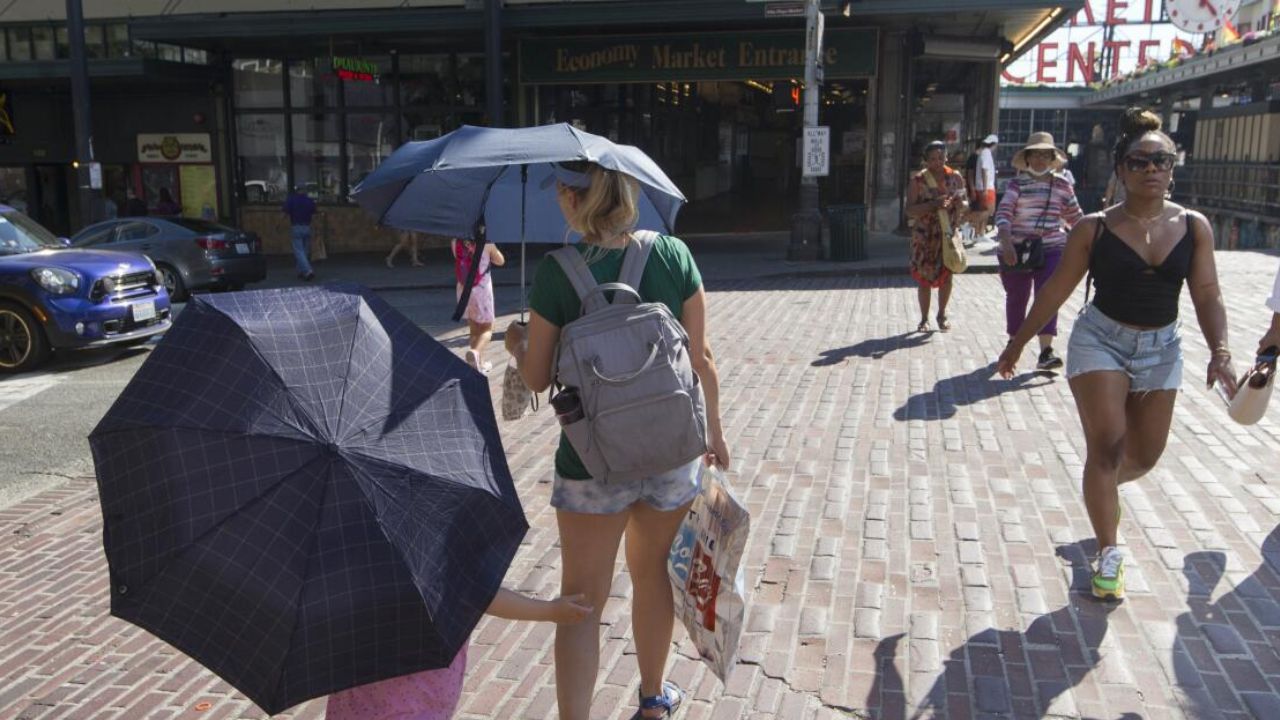
Washington, DC — A powerful heat wave continues to grip the East Coast, shattering temperature records, straining power grids, and prompting emergency preparations as millions of Americans prepare to celebrate the Fourth of July outdoors.
The most dangerous conditions shifted into the Interstate 95 corridor on Thursday, bringing upper 90s to low 100s from Washington, DC, to Boston, while oppressive humidity pushed heat index values above 110 degrees in some communities. Weather officials warn the extreme heat will persist through Friday, increasing the risk of heat-related illnesses across much of the region.
Multiple Cities Break Long-Standing Temperature Records
Thursday’s scorching temperatures rewrote record books across the Northeast and Mid-Atlantic.
Washington National Airport reached 102 degrees, breaking a record that had stood since 1898, while Boston climbed to 101 degrees, surpassing its previous daily record of 98 degrees set in 1963.
Other major cities also experienced historic heat. Newark reached 104 degrees, Philadelphia hit 103 degrees, tying a record from 1901, and Central Park in New York City reached 100 degrees, marking its first triple-digit temperature in 14 years.
Forecasters say even more records could fall on Friday as the heat dome remains firmly in place across the region.
Heat Wave Strains Power Grid and Disrupts Holiday Travel
The prolonged heat is placing enormous pressure on electrical systems as residents rely heavily on air conditioning.
More than 200,000 utility customers lost power Thursday evening, including thousands of customers served by Con Edison in the New York City area. While officials said not every outage was directly caused by the heat, the timing has left many households without air conditioning during one of the hottest periods of the year.
Con Edison also reduced voltage in parts of Manhattan and the Bronx while crews worked to repair equipment and urged customers to conserve electricity by limiting air conditioner use and reducing unnecessary power consumption.
The extreme weather is also affecting holiday travel. Delta Air Lines issued a high-heat advisory for LaGuardia Airport, while Amtrak warned passengers that train speeds may be reduced because excessive temperatures can affect rail infrastructure.
Cities Expand Emergency Measures Ahead of July Fourth
Local governments across the East Coast have activated emergency response plans to protect residents and visitors during the holiday weekend.
Cities including Washington, DC, New York City, Philadelphia, Boston, and Raleigh have expanded cooling centers, hydration stations, and medical services.
In Philadelphia, officials declared a Heat Health Emergency through Saturday evening, shortened the city’s Fourth of July parade route, and canceled or modified several outdoor events due to safety concerns.
Nearby communities including Norristown, Pennsylvania, and Haddon Township, New Jersey, also canceled Independence Day parades because of the dangerous temperatures.
Meanwhile, Washington, DC, has expanded cooling centers and emergency medical resources as hundreds of thousands of visitors are expected to gather for holiday celebrations. Organizers on the National Mall have added water stations, cooling tents, and air-conditioned buses to help attendees stay safe.
Overnight Heat Adds to Health Concerns
Meteorologists say one of the biggest dangers is the lack of overnight cooling.
Instead of providing relief, nighttime temperatures are expected to remain in the 70s and even near 80 degrees in many urban areas, making it difficult for the body to recover after prolonged exposure to extreme daytime heat.
The National Weather Service warns that more than 160 million people remain under major or extreme heat risk through the end of the week. Health officials continue to encourage residents to stay hydrated, limit outdoor activities during peak afternoon hours, check on vulnerable family members and neighbors, and never leave children or pets inside parked vehicles.
While portions of the Midwest may begin seeing some relief later in the holiday weekend, much of the East Coast and South are expected to remain hotter than normal into next week as the powerful heat dome slowly weakens.
How are conditions where you live? Are local communities taking extra precautions for the holiday heat? Share your experience and any safety tips in the comments below.