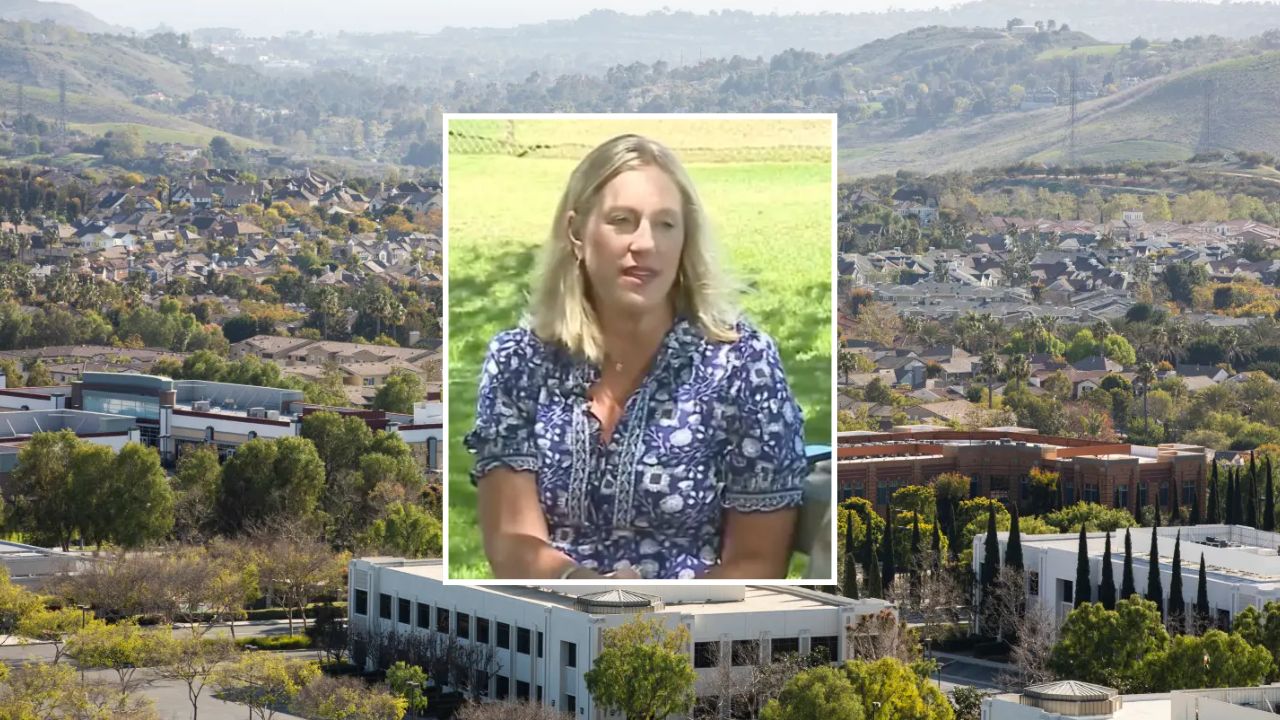
Ladera Ranch, California — A Southern California community already grappling with a rare childhood cancer cluster is now facing another troubling question after a local mother said she has received dozens of reports of seriously ill pets from neighbors.
While no connection has been established, residents say the growing number of illnesses has deepened concerns about whether an environmental factor could be affecting both people and animals.
Mother’s Dog Diagnosis Raised New Questions
Ladera Ranch resident Kira Davis has been advocating for answers as families seek to understand why multiple children in the neighborhood have developed Ewing sarcoma, a rare form of cancer.
Davis said her concerns expanded after her own dog was diagnosed with a brain tumor.
According to Davis, her dog suddenly became ill, lost its vision, and was diagnosed with the tumor despite being only seven or eight years old.
At first, she believed it was simply an unfortunate coincidence. However, after mentioning her dog’s illness in a neighborhood community chat, she said the responses were overwhelming.
According to Davis, dozens of neighbors replied with stories of pets suffering from serious illnesses, prompting her to wonder whether there could be a broader environmental issue affecting the community.
Rare Childhood Cancer Cases Continue to Concern Families
The concerns come as Ladera Ranch remains the focus of several investigations into an apparent cluster of Ewing sarcoma, an uncommon cancer that affects bones and soft tissue.
Residents say at least six children have died from the disease in the community since 2013. Nationally, Ewing sarcoma is extremely rare, affecting only about 200 to 240 children and teenagers each year.
Data from the California Cancer Registry confirmed that multiple cases of Ewing sarcoma were identified in Ladera Ranch during a 10-year period ending in 2021.
Families have spent months urging government agencies and health experts to determine whether environmental conditions may have contributed to the unusually high number of diagnoses.
Residents Question Long-Term Pesticide Use
Many residents have focused their concerns on the community’s use of older pesticide products.
Davis said Ladera Ranch is among the few remaining Southern California communities that still uses certain chemical pesticides that many neighboring areas have replaced with alternative products.
She emphasized that residents are not claiming pesticides have been proven to cause the illnesses, but believe the possibility deserves careful investigation.
According to Davis, if there is even a chance that landscaping chemicals could be contributing to the problem, switching to safer alternatives would be a reasonable precaution while research continues.
Officials Say No Link Has Been Confirmed
Health officials have not found evidence establishing a connection between the reported cancer cases and environmental factors, including pesticide use.
At the same time, multiple scientific studies and investigations remain underway to determine whether any common source may explain the apparent cancer cluster.
Residents have also reported cases of synovial sarcoma, another rare form of cancer that affects fewer than 1,000 Americans each year, adding to community concerns.
Community Takes Precautionary Steps
While investigations continue, Ladera Ranch has temporarily banned the use of certain toxic chemical landscaping products.
A local advisory committee is reviewing the community’s landscaping and maintenance practices as part of the ongoing response.
For Davis and many other families, the goal is not to assign blame before the evidence is complete but to ensure every possible risk is examined.
She said residents simply want answers and hope that taking precautionary measures now could help protect future generations if an environmental factor is ultimately identified.
What do you think? Should communities adopt precautionary environmental measures while rare disease clusters are being investigated, even before a direct link is proven? Share your thoughts in the comments below.