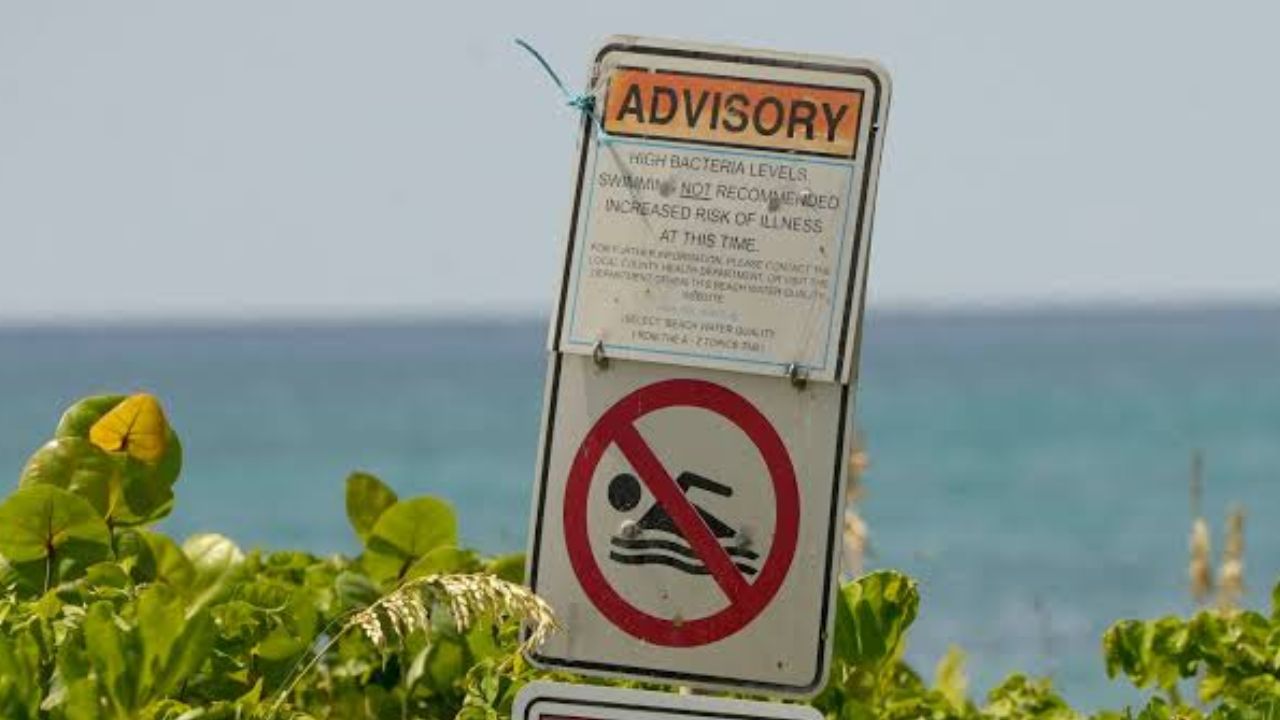
Atlantic City, New Jersey — Summer beach plans along the Jersey Shore have taken an unexpected turn after health officials issued swimming advisories for 10 Atlantic City beaches because of elevated levels of fecal bacteria in the ocean.
The New Jersey Department of Environmental Protection (NJDEP) issued the advisories on August 18, warning beachgoers about water quality concerns at several popular stretches of Atlantic City’s shoreline. The advisories remained in effect as of Wednesday, meaning visitors were being urged to pay attention to the warnings before entering the water.
States Avenue Beach Records Major Bacteria Spike
One of the most significant readings came from States Avenue Beach, where testing detected 320 CFU of enterococci per 100 mL of ocean water.
That figure is more than three times New Jersey’s summer threshold of 104 CFU per 100 mL for marine water.
Enterococci are bacteria commonly associated with the intestinal tracts of warm-blooded animals, including humans, and can be present in fecal matter. Elevated levels in recreational water can signal contamination and increase the potential health risks for people who enter the ocean.
The other beaches included in the advisory are located at Connecticut, Iowa, Mississippi, Missouri, North Carolina, Pennsylvania, South Carolina, Texas and Virginia avenues.
What Causes Enterococci Levels to Rise?
The presence of enterococci in ocean water can come from several sources.
According to the Environmental Protection Agency, contamination can be associated with wastewater treatment plant outflow, leaking septic systems and stormwater runoff. Domestic animals and wildlife can also contribute to elevated bacteria levels.
Other potential sources include runoff connected to manure, sewage, pastures, rangelands, feedlots and manure storage areas.
That means a spike in bacteria does not necessarily point to a single source of contamination. Environmental conditions and runoff can contribute to changing water quality, which is why regular monitoring is important at heavily visited beaches.
Swimming Above the State Standard Can Carry Health Risks
New Jersey’s recreational water standard allows no more than 104 CFU of enterococci per 100 mL before a swimming advisory is triggered.
Officials warn that exposure to water exceeding the standard can increase the risk of illnesses, including gastroenteritis, low-grade fevers and infections.
For visitors who traveled to Atlantic City expecting a day in the ocean, the advisories could be an unwelcome interruption to their plans. Still, avoiding the affected beaches while advisories remain active can help reduce unnecessary health risks.
Daily Testing Will Determine When Beaches Reopen
The advisories are not necessarily permanent.
As part of the NJDEP’s water-quality monitoring program, officials will test the affected beaches daily. Once testing shows that the water has returned to the state’s acceptable standard, the advisories can be lifted.
Meanwhile, not every Atlantic City beach is under an advisory. Several beaches tested within acceptable levels, meaning visitors still have options if they want to enjoy the shoreline while avoiding the affected areas.
For anyone planning a trip to Atlantic City, checking the latest beach advisories before heading into the water remains an important step.
Would you still visit the beach while a swimming advisory is in effect, or would you skip the ocean altogether? Share your thoughts in the comments.