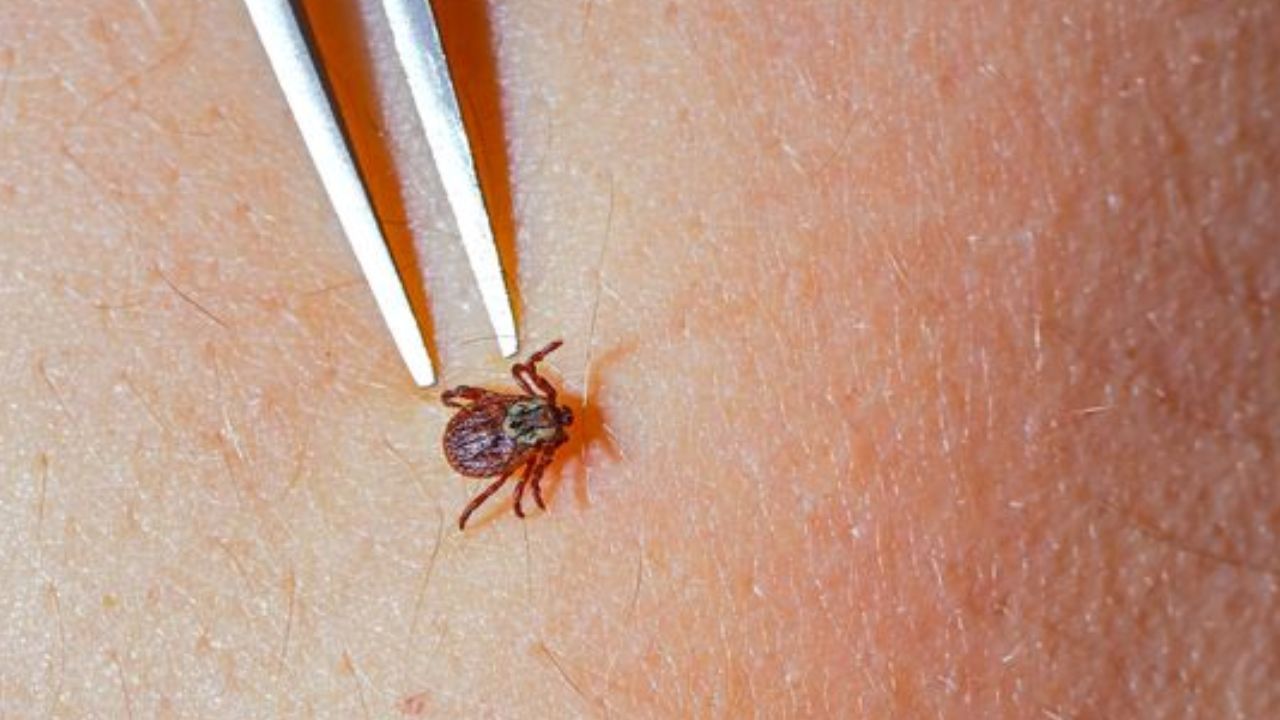
Biltmore Forest, North Carolina — For years, Lyme disease was widely associated with the Northeast and Upper Midwest. But new research from North Carolina is challenging that assumption, finding large numbers of ticks carrying Lyme disease bacteria in a community where many people may not expect the illness.
For Angela Newman, that changing reality came painfully close to home. Nearly a decade ago, she developed a confusing collection of symptoms, including blurry vision, a stiff neck, hypersensitive skin, numbness and weakness. She spent years seeing specialists and undergoing medical testing before finally getting an answer.
A Five-Year Search for a Diagnosis
Newman said doctors initially considered conditions such as anxiety and depression while trying to explain her symptoms. The turning point came during a college reunion, when a friend suggested that her symptoms could be linked to Lyme disease.
When Newman asked her primary care doctor for a test, she recalled being told, “I don’t think you have Lyme. We don’t really have that around here.”
She insisted on being tested. The result was positive.
It took five years to receive her diagnosis, Newman said, but after beginning antibiotics, her symptoms started improving within days. She eventually needed nearly a year to feel like herself again.
“I knew I wasn’t crazy,” she said, describing her frustration after years of having her symptoms questioned.
Researchers Find Lyme-Carrying Ticks in North Carolina
New research from the Centers for Disease Control and Prevention and University of North Carolina researchers is now providing evidence that Lyme disease may be a much more significant concern in parts of the South than previously recognized.
Researchers focused on Biltmore Forest, a small mountain community near the Blue Ridge Parkway. Between November 2024 and August 2025, researchers collected 373 ticks from 22 household lawns.
The findings were striking. About 76.9% of the ticks were blacklegged, or deer, ticks, the species known to transmit Borrelia burgdorferi, the bacterium responsible for Lyme disease.
Even more concerning, 39.6% of adult blacklegged ticks tested positive for the bacteria.
That infection rate is comparable to levels found in parts of Pennsylvania, New York and New England, where Lyme disease has long been considered a major public health concern.
Other Dangerous Bacteria Found
The study also identified other disease-causing bacteria in North Carolina ticks.
Researchers found four ticks carrying Anaplasma phagocytophilum and another four carrying Borrelia miyamotoi, which causes hard tick relapsing fever.
Both infections can produce flu-like symptoms, making them difficult to recognize without appropriate testing.
Experts say the discovery is particularly important because physicians in the region may not routinely consider these illnesses when evaluating patients.
Climate and Wildlife May Be Helping Ticks Spread
Experts say the geographic expansion of ticks is connected to changes in the environment.
As winters become warmer, deer, mice and other animals that host ticks can expand into new areas. Ticks then travel with those animals, gradually establishing themselves in communities where they were once uncommon.
Lyme disease remains the most prevalent tick-borne illness in the United States, with hundreds of thousands of infections estimated each year.
Other tick-related illnesses are also expanding. Alpha-gal syndrome, which can trigger an allergy to red meat and other mammalian products, has spread into additional regions, while Powassan virus reached a record number of reported cases in 2024.
Doctors Urged to Recognize Changing Risks
One of the biggest concerns is that medical awareness may not be expanding as quickly as the ticks themselves.
Lyme disease and other tick-borne infections can often be treated with antibiotics, but early diagnosis can be difficult. Some testing methods may not reliably detect infection during the earliest stages.
Experts say primary care doctors and emergency physicians should consider Lyme disease and other tick-borne illnesses when patients experience unexplained symptoms, even in regions where these diseases have not traditionally been considered common.
For communities such as Biltmore Forest, the message is becoming increasingly clear: the presence of infected ticks is no longer simply a Northeast problem.
As one expert warned, the environments where these ticks can survive and flourish “is only increasing.”
Have you noticed more ticks in your area in recent years? Do you think doctors should receive more training on emerging tick-borne diseases? Share your thoughts in the comments below.