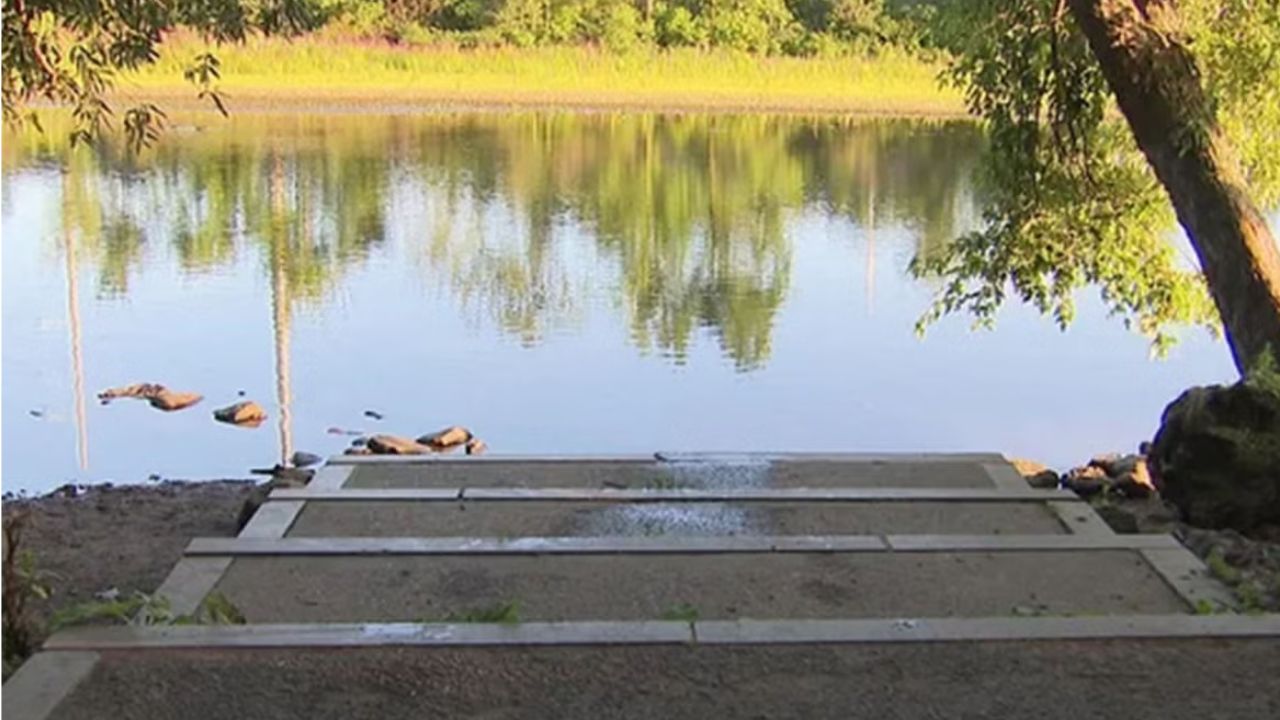
West Roxbury, Massachusetts — A Boston-area family is mourning the loss of their beloved 16-year-old dog after a swim in the Charles River, with the pet’s owner believing toxic blue-green algae exposure may have played a role in the sudden tragedy.
Elivia Savadier Sagov said she took her two dogs to Millennium Park in West Roxbury on Friday, where they entered the Charles River. Although the water appeared clean, she noticed her dog, Dobby, drinking from the river before she could stop her.
Within hours, both dogs reportedly became sick, but Dobby’s condition quickly worsened.
Both Dogs Became Sick After Swimming
According to Savadier Sagov, both pets developed symptoms shortly after leaving the park.
While each dog became ill, Dobby experienced severe muscle stiffness, seizures, weakness and gastrointestinal problems, according to her owner. Despite efforts to help the aging dog, Dobby died on Sunday.
Savadier Sagov believes exposure to toxic blue-green algae, also known as cyanobacteria, may have caused the fatal illness.
“It was so beautiful and clear. I saw her drink some water, which I didn’t like, but I didn’t catch her soon enough,” Savadier Sagov said.
The unexpected loss has left the family devastated.
“This year I was very aware [of the algae]. I thought maybe not to let them in the water at all, but it’s so tempting,” Savadier Sagov told CBS Boston. “We miss her terribly. It’s just been so sudden. Just really miss her.”
Officials Issue Cyanobacteria Advisory
Following the incident, officials issued a precautionary cyanobacteria advisory covering portions of the Charles River, including Millennium Park and Cutler Park.
Warning signs have been placed at public access points while authorities investigate water conditions.
The Massachusetts Department of Public Health is scheduled to collect water samples to test for cyanobacteria cells as well as two liver-affecting toxins, microcystins and cylindrospermopsin.
The Charles River Watershed Association said it was not aware of recent testing in the exact section where the dogs reportedly swam. However, the organization noted that cyanobacteria blooms have appeared in the Charles River nearly every summer over the past decade, with one bloom lasting as long as 12 weeks in 2020.
Why Blue-Green Algae Can Be Dangerous for Dogs
Veterinary experts warn that cyanobacteria can produce toxins that are especially dangerous for dogs because they often drink water or swallow algae while swimming.
Flash Flood Risk Grows: Mid-Atlantic and Carolinas Could See Inches of Rain Through the Weekend
According to the Cornell University College of Veterinary Medicine, exposure can affect the nervous system, liver and skin, causing symptoms such as vomiting, diarrhea, weakness, muscle tremors, seizures, difficulty breathing and, in severe cases, death.
Symptoms may develop within minutes or hours after exposure, and experts stress that there is no antidote, making immediate veterinary treatment critical if poisoning is suspected.
Owner Hopes More Warning Signs Can Prevent Future Tragedies
Savadier Sagov now hopes local officials will increase awareness of the seasonal risks associated with blue-green algae.
She believes permanent warning signs at popular swimming locations could help other pet owners avoid similar heartbreak.
“I almost feel there should be permanent notices here that state it very strongly: July and August, there is likely to be algae,” she told CBS Boston. “If there’s rain, you may not even see the scum, but spores are still in the water. And once the dog gets this, the vets say there’s nothing that can be done.”
As testing continues, officials are urging people and pet owners to pay close attention to posted advisories and avoid entering water where harmful algae may be present.
Have you ever encountered harmful algae warnings at your local lake or river? What precautions do you take to keep your pets safe around natural bodies of water? Share your thoughts respectfully in the comments below.