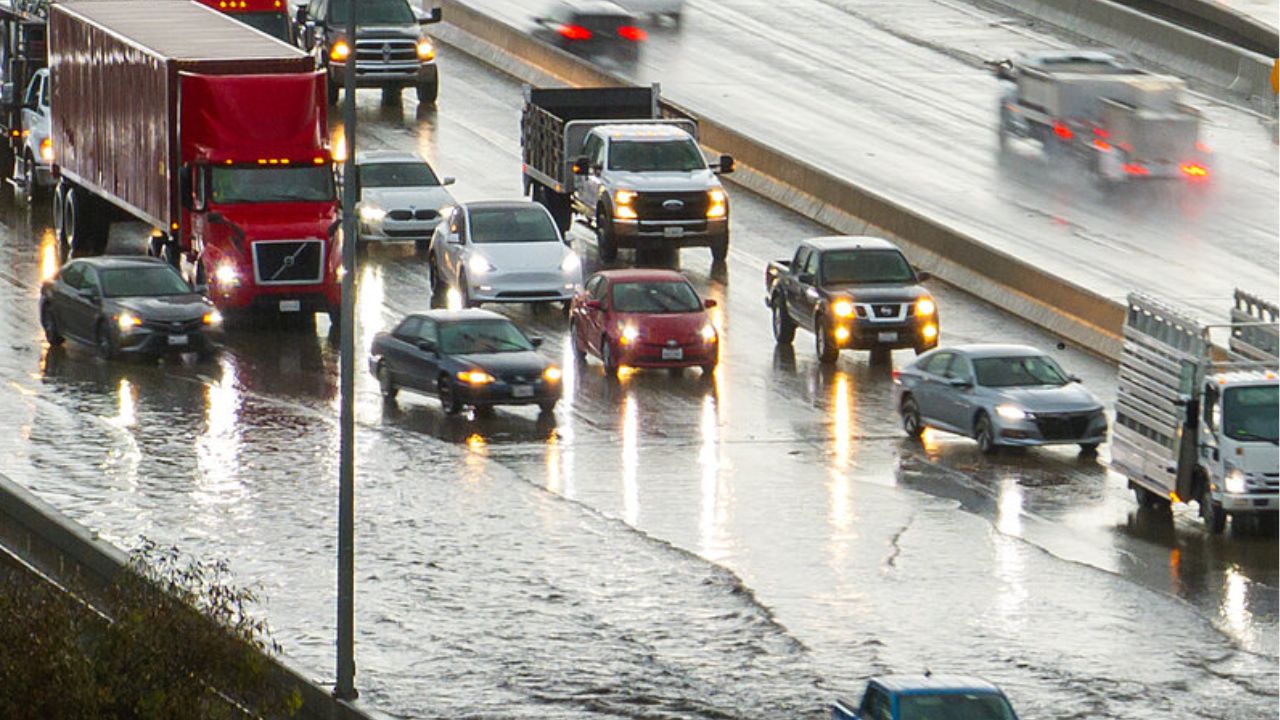
California — A massive Atlantic Ocean current that helps regulate Earth’s climate is weakening, and scientists say the consequences could extend thousands of miles beyond the Atlantic—including bringing stronger storms and more intense atmospheric rivers to California later this century.
The findings come from a new study published in Nature Communications, where researchers used decades of NASA atmospheric observations and climate simulations to examine how changes in the Atlantic Meridional Overturning Circulation (AMOC) could reshape weather patterns around the world.
While researchers stress that a complete collapse of the current is not considered inevitable, they say continued warming driven by greenhouse gas emissions could significantly weaken the system and alter rainfall, storms and water resources across multiple continents.
What Is the AMOC and Why Does It Matter?
The Atlantic Meridional Overturning Circulation, often called the AMOC, is a vast network of ocean currents that transports warm tropical water northward through the Atlantic before cooler, denser water sinks and flows back south along the ocean floor.
This circulation helps regulate temperatures, rainfall patterns and weather across much of the Northern Hemisphere.
Scientists have long observed that the AMOC has been slowing, largely because climate change is warming the oceans and increasing freshwater flowing into the North Atlantic, making it harder for dense water to sink and keep the circulation moving.
Researchers are still debating how much the AMOC may weaken in the future and whether a full collapse could occur, but many agree that further weakening would have widespread climate impacts.
Study Suggests California Could See Stronger Atmospheric Rivers
According to the new research, a weaker AMOC could strengthen atmospheric rivers along parts of North America’s West Coast by the end of the century.
Atmospheric rivers are long, narrow bands of water vapor that transport enormous amounts of moisture through the atmosphere.
Lead author Mohima Mimi, a climate dynamics researcher at the University of California, Riverside, said the team wanted to understand how changes in the Atlantic could influence weather far beyond the ocean itself.
“It is well known that the AMOC is a big player in the world’s climate system, and that it is slowing down.”
She added:
“What we didn’t know is exactly how the AMOC might impact atmospheric moisture and storms outside the Atlantic region.”
The researchers found that weakening ocean circulation may strengthen storms along California’s coastline, while reducing storm activity over Greenland and parts of the Arctic.
More Rainfall Could Also Mean Greater Flood Risk
Atmospheric rivers already provide a significant share of California’s annual precipitation and play a critical role in replenishing reservoirs and snowpack.
However, they are also responsible for many of the state’s most damaging floods.
According to the study, a weaker AMOC could make atmospheric rivers more frequent, longer-lasting and capable of carrying even more moisture, increasing the likelihood of heavy rainfall events.
The researchers project that atmospheric rivers could become more common along North America’s West Coast from Baja California to Alaska, while becoming less frequent across parts of the Arctic, Greenland and northern Asia.
They also found that changing ocean circulation could shift moisture around the globe, increasing rainfall in regions including western Europe, southern Asia, eastern South America and parts of Antarctica.
Researchers Say Future Outcomes Depend on Climate Change
Scientists caution that these findings are projections based on climate models, not guarantees of what will happen.
How much the AMOC weakens will depend largely on future greenhouse gas emissions and the pace of global warming.
Researchers also note that California may be able to reduce some future water challenges by expanding natural floodplains, restoring wetlands and improving water capture during large storm events.
The study highlights how closely connected Earth’s climate systems are, showing that changes in one major ocean current can influence weather patterns thousands of miles away.
“This research shows that the effects of the AMOC extend far beyond the Atlantic Ocean,” Mimi said.
“Understanding these connections will help us better prepare for future changes in water resources and extreme weather.”
What do you think about these new climate projections? Do you believe communities should begin preparing now for stronger storms and changing weather patterns? Share your thoughts respectfully in the comments below.