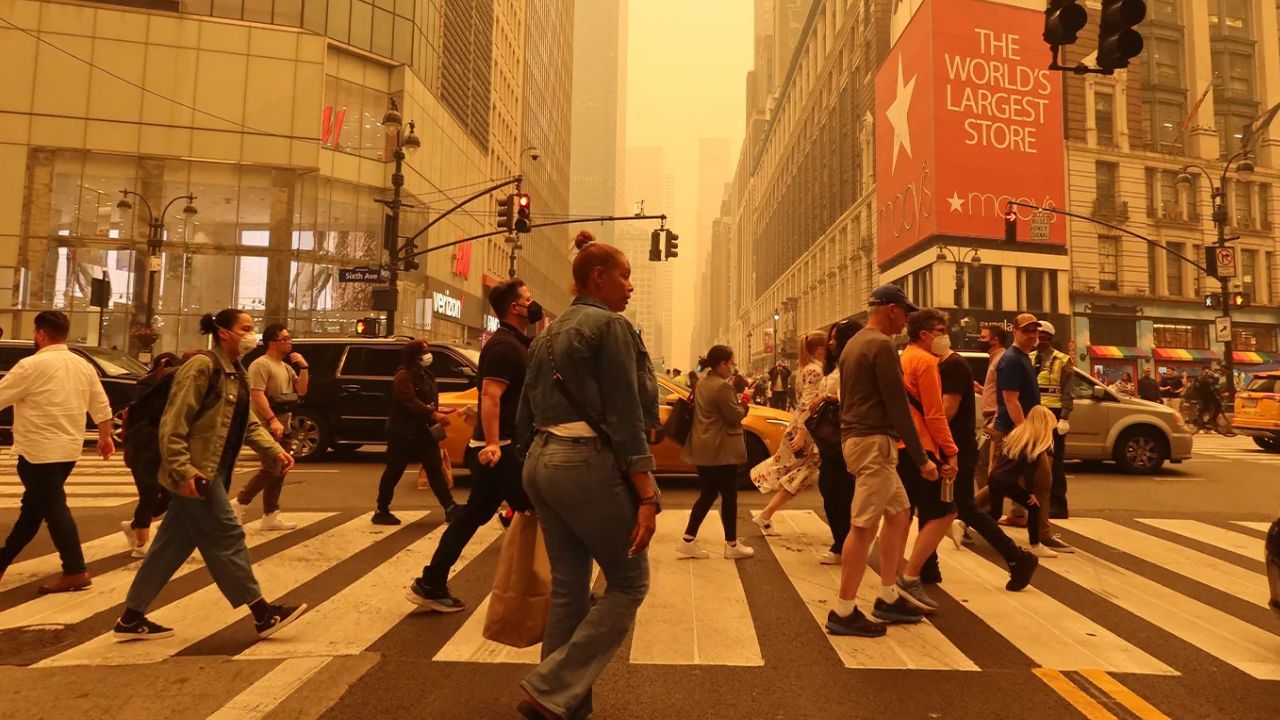
Boston, Massachusetts — Thick wildfire smoke drifting south from hundreds of active Canadian wildfires is once again creating unhealthy air quality across parts of the northeastern United States and Canada, with millions of residents waking up to hazy skies and health alerts.
Meteorologists say the smoke is producing conditions similar to the historic wildfire outbreak that blanketed much of the region during the summer of 2023, reducing visibility and raising concerns for people with respiratory conditions.
Hundreds of Canadian Wildfires Continue to Fuel Smoke
According to forecasters, more than 800 wildfires are currently burning across Canada, with dozens of the largest and most active fires located in western Ontario.
Additional fires burning in Manitoba, Saskatchewan and the Northwest Territories are also contributing to the widespread smoke, although much of that smoke remains higher in the atmosphere.
AccuWeather Vice President of Forecast Operations Dan DePodwin said the current event has the potential to resemble the significant smoke outbreak experienced several years ago.
“In 2023, a major fire outbreak in Quebec caused days of unhealthy air quality in the northeastern U.S. This event could cause similar levels of poor air quality in spots.”
Toronto and Boston Among Hardest-Hit Cities
Some of the worst air quality was reported in Toronto, where the Air Quality Index (AQI) climbed to 220, placing the city in the “very unhealthy” category.
According to air quality experts, those conditions can quickly affect sensitive groups while also causing breathing difficulties and throat irritation for otherwise healthy individuals.
Meanwhile, Boston’s AQI reached 147, placing it in the “unhealthy” category. Forecasters say only limited improvement is expected through Thursday as smoke continues to linger over the region.
Hawaii’s Kilauea Volcano Erupts Again as Lava Shoots Nearly 1,000 Feet Into the Sky and Massive Ash Plume Rises
Residents in both cities reported noticeably smoky skies, with visibility reduced throughout much of the day.
Smoke Expected to Spread Across More States
Forecasters warn that the smoke plume is expected to expand further across the Great Lakes and Northeast over the next several days.
Cities including Detroit, Cleveland, New York City and Philadelphia could all experience hazy skies and worsening air quality as smoke continues moving south and east.
Meteorologists also noted that high-altitude smoke has stretched from Indiana and Ohio into Virginia and parts of North Carolina, creating hazy conditions even in areas where air quality remains relatively better.
At Niagara Falls, the difference in visibility between Tuesday and Wednesday was dramatic as a thick orange-gray haze settled over the landmark.
Health Officials Urge Residents to Limit Outdoor Activity
Because of the elevated pollution levels, officials are encouraging residents to reduce time spent outdoors, particularly children, older adults and people with asthma, heart disease or other respiratory conditions.
Experts warn that prolonged outdoor activity or exercise during periods of poor air quality may increase the risk of difficulty breathing, throat irritation, coughing and itchy eyes.
Meteorologists also noted that the smoke may slightly reduce daytime temperatures beneath the ongoing heat dome. In locations where the smoke is thinner, it could also produce unusually vivid sunrises and sunsets.
With wildfire activity expected to continue across Canada, forecasters say smoke conditions may fluctuate in the coming days depending on changing winds and fire behavior.
Have you noticed smoky skies or poor air quality in your area? How has it affected your daily routine? Share your experiences and stay safe by following local air quality advisories.