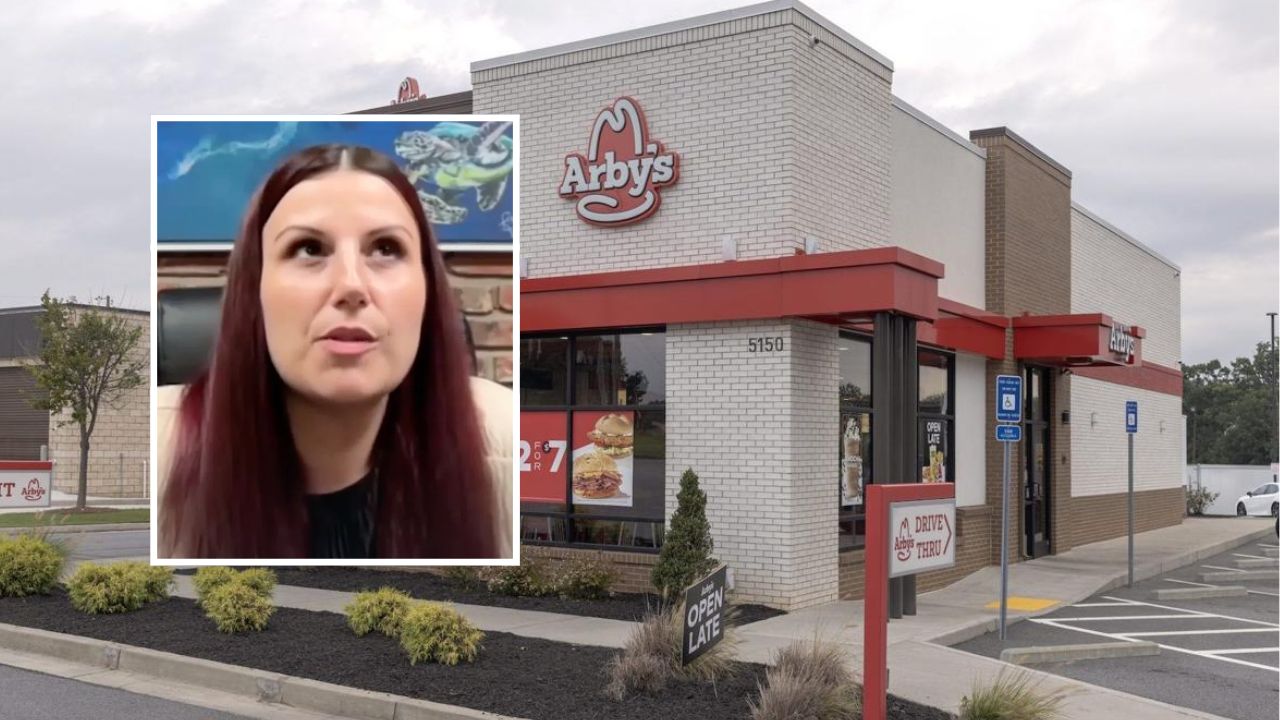
Broken Bow, Oklahoma — A former Arby’s manager is facing felony charges and a civil lawsuit after authorities accused her of intentionally contaminating a customer’s food during a late-night drive-thru order.
The case has attracted widespread attention because of allegations that the contaminated food may have exposed the customer to a viral infection, though officials have not established a direct medical link between the incident and the woman’s later diagnosis.
The former employee, Amanda Hendricks, has been charged with felony poisoning following an investigation by local law enforcement.
Investigation Began After Employee Reported Incident
According to court records and a police affidavit, investigators launched the case after receiving information from an Arby’s employee who reported that another worker had allegedly spit into a customer’s meal.
The customer, identified in court filings as Jennica Church, visited the restaurant on March 28 after finishing a bartending shift. Church later recalled noticing that her order appeared to be taking longer than expected.
“It was taking a little bit of time,” Church said. “I thought they were mad at me because it was about to close.”
Police obtained a search warrant for surveillance footage from the restaurant and reviewed video from the night in question.
According to investigators, the footage appeared to show Hendricks handling ingredients for a sandwich before lowering her head toward the food. The affidavit alleges that saliva could be seen falling onto the sandwich.
Former Manager Charged With Felony Poisoning
Following their review of the evidence, investigators interviewed Hendricks and later sought an arrest warrant. Authorities ultimately charged her with felony poisoning with intent to injure, a serious criminal offense.
The case remains active, and prosecutors will be required to prove the allegations in court. As with all criminal defendants, Hendricks is presumed innocent unless proven guilty.
The restaurant employee is no longer working at the location, according to reports.
Customer Claims Health Problems After Incident
In addition to the criminal case, Church has filed a civil lawsuit against Hendricks, Arby’s, and related restaurant entities.
The lawsuit alleges that she later developed symptoms and was diagnosed with HSV-1, commonly referred to as the virus most often associated with oral herpes.
According to the complaint, Church believes the diagnosis was connected to the contaminated food. Family members said the incident caused significant emotional distress within the household.
Church’s mother-in-law, Patricia Dollarhite, described the impact on relatives who worried they may have been exposed.
“My son was sitting at my table, eating breakfast and he wanted a kiss, and he could not get one, so you bet I’m angry,” Dollarhite said.
“I see what it’s doing to my grandchildren, my son, my husband.”
Medical Questions Remain Unresolved
While the lawsuit alleges a connection between the incident and Church’s diagnosis, medical experts generally note that determining the source of an HSV-1 infection can be difficult.
HSV-1 is extremely common and often causes no symptoms. The virus is typically transmitted through direct contact with infected saliva, skin, or sores around the mouth, although transmission patterns can vary.
Aldi Shoppers Can Score Mystery Grocery Boxes This Week While Supplies Last — Here’s How to Get One
There is currently no cure for herpes, though antiviral medications can help reduce symptoms and lower the risk of transmission.
Importantly, court filings indicate that whether the alleged food contamination directly caused Church’s diagnosis remains unresolved and is expected to be a central issue in the legal proceedings.
Civil and Criminal Cases Continue
The criminal prosecution and civil lawsuit are expected to proceed separately.
Authorities continue to investigate the alleged food contamination, while Church and her family seek damages through the civil court system.
The case has also raised broader concerns about food safety, employee conduct, and the responsibilities restaurants have to protect customers from intentional contamination.
As both cases move forward, courts will ultimately determine whether the allegations can be substantiated and what legal consequences may follow.
What are your thoughts on food safety and customer protections in restaurants? Do you believe businesses should face stricter penalties when intentional food contamination is alleged? Share your thoughts respectfully in the comments below.