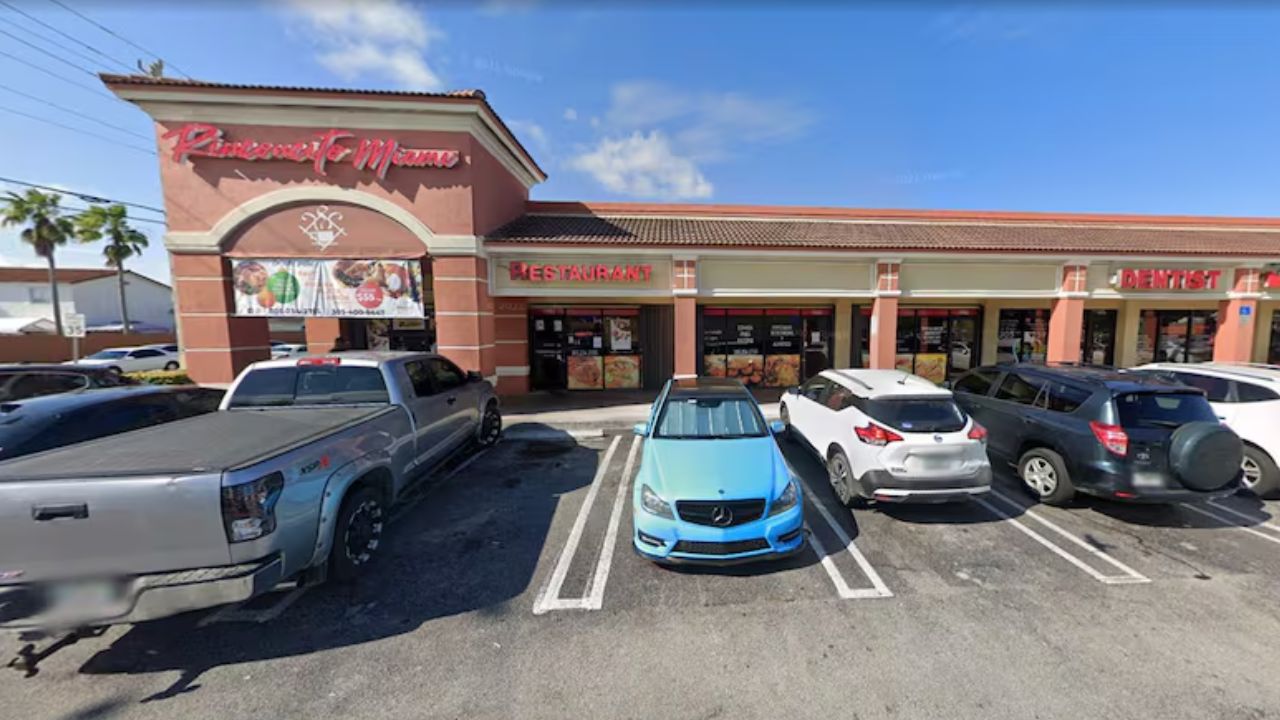
Miami-Dade County, Florida — One restaurant inspection has raised serious food safety concerns after inspectors found 63 violations at Rinconcito Miami 2, including mold-like buildup, insects, improper handwashing and potentially hazardous food being stored at temperatures well above safe cold-holding limits.
The restaurant, located at 15956 SW 137th Ave. in Country Mall Plaza, was inspected on August 11. Despite the unusually high number of violations, the establishment was not shut down.
Inspectors Find Mold, Flies and a Dead Roach
The inspection report detailed numerous sanitation problems throughout the restaurant.
Inspectors reported an accumulation of black and green mold-like substance inside the ice machine/bin. A blender was also observed with a mold-like substance on its exterior, while food-contact surfaces including cutting boards and a can opener were described as soiled with food debris or mold-like material.
The kitchen also had pest concerns.
Inspectors found two live flies flying in the kitchen and one dead roach on the floor near the dishwasher.
Other conditions included dirty equipment handles, grease and old food debris on floors, dirty refrigerator shelves, standing water and damaged ceiling tiles.
Raw Meat and Seafood Found at Unsafe Temperatures
One of the most serious findings involved the restaurant’s walk-in cooler.
Inspectors found multiple potentially hazardous foods being held at temperatures above 41 degrees Fahrenheit, the required cold-holding temperature.
The inspection report listed raw pork at 60°F, pork belly at 60°F, raw shrimp at 59°F, cooked noodles at 57°F, raw pork chop at 53°F, raw chicken at 47°F and cooked ground beef at 52°F.
Other foods, including raw whole fish, cooked pork and bean sprouts, were also reportedly above the required temperature. According to the report, the food had been in the cooler since the previous day.
Because of the temperature abuse, inspectors issued a stop-sale order covering the affected time/temperature-control-for-safety foods.
Hot Food Was Also Being Held Too Cold
The inspection found temperature problems on both sides of food storage. Several hot foods were being held below the required 135°F minimum.
Inspectors recorded cooked onions at 82°F, maduros at 92°F, rice and beans at 96°F, cooked chicken at 106°F and yucca at 123°F. Malanga cream was recorded at 121°F.
Milk in the cafeteria area was reportedly being held at 127°F.
The inspection report stated that some of the food had been at those temperatures for less than two hours, according to the operator.
Handwashing Problems Found Throughout Kitchen
Inspectors also documented repeated problems involving employee handwashing.
Employees were reportedly observed beginning food preparation or handling clean equipment without washing their hands first. One employee allegedly touched a soiled apron before handling clean equipment, while another touched a trash can and then continued working with food without washing.
An employee was also observed failing to wash hands before putting on gloves.
The restaurant had several problems with its handwashing sinks as well. Inspectors reported insufficient water pressure, a broken soap dispenser, cold water being used for handwashing and employees using sinks that were not approved for handwashing.
One handwashing sink was reportedly blocked by equipment, while another was being used to store plastic containers.
Follow-Up Inspection Still Found Problems
The large number of violations did not end with the initial inspection. According to the information provided, a follow-up inspection the following day found 35 violations still outstanding.
The inspection also identified broader maintenance and sanitation issues, including leaking pipes, water draining onto the floor, damaged floor and wall surfaces, rusted freezer shelving, grease buildup around the hood ventilation system and food stored directly on the floor.
The report further noted that a certified food manager or person in charge lacked knowledge of employee health policy and health requirements.
With 63 violations recorded during a single unannounced inspection, the findings raise significant questions about sanitation, food handling and employee practices at the restaurant.
What do you think about the inspection findings? Would you feel comfortable eating at a restaurant after seeing 63 violations on one inspection? Share your thoughts in the comments below.