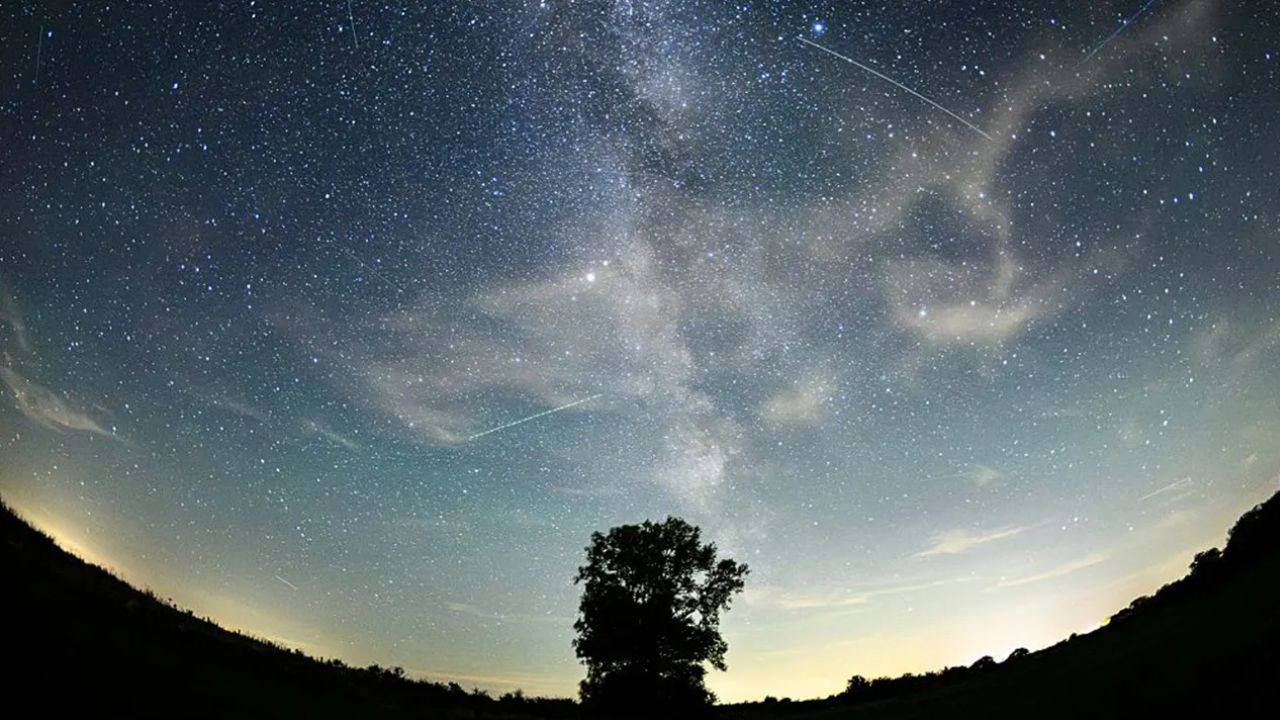
Southern California — Skywatchers across Southern California have a reason to stay up late this week as the annual Perseid meteor shower reaches its peak overnight Wednesday into Thursday, potentially filling the summer sky with dozens of bright streaks of light.
The 2026 Perseids are arriving under unusually favorable conditions. The American Meteor Society lists Aug. 12-13 as the peak, with the moon at essentially 0% illumination, meaning moonlight should not interfere with the display.
Perseids Expected to Peak Wednesday Night
The Perseids are among the most popular meteor showers of the year, and they are especially well known for producing bright, fast-moving meteors and occasional fireballs.
During the peak, observers in dark rural locations could see approximately 30 to 50 meteors per hour, while the shower’s theoretical rate can reach around 100 meteors per hour under ideal conditions.
The best opportunity to see the most meteors will come after midnight and during the hours before sunrise, when the Perseid radiant in the constellation Perseus climbs higher in the northeastern sky.
That does not mean viewers need to stare directly at Perseus. Meteors can appear across large portions of the sky, so a broad, unobstructed view is preferable.
New Moon Creates Ideal Viewing Conditions
One of the biggest advantages for skywatchers this year is the new moon.
Bright moonlight can overwhelm faint meteors and make a meteor shower appear much less active. But the 2026 Perseid peak coincides with a new moon, leaving the nighttime sky significantly darker.
That makes this year’s display particularly appealing for people willing to leave heavily light-polluted areas.
For Southern California residents, simply driving away from major city centers can make a noticeable difference. The darker the surrounding sky, the more likely observers are to catch fainter meteors.
Why the Perseid Meteor Shower Happens
The Perseids occur every year as Earth passes through a stream of debris left behind by Comet 109P/Swift-Tuttle.
Tiny pieces of material from the comet enter Earth’s atmosphere at extremely high speeds. As they interact with the atmosphere, they heat up and create the bright streaks commonly called shooting stars.
NASA describes the Perseids as one of the year’s most popular meteor showers because they can produce numerous bright meteors during warm summer nights.
The meteor shower has also been observed for more than 2,000 years, making it one of the longest-known annual celestial displays.
Best Places to Watch in Southern California
Skywatchers should look for locations far away from artificial lights and choose an area with as much open sky as possible.
Potential viewing areas include higher elevations in the San Gabriel Mountains, including Mount Wilson, Chilao and Crystal Lake. Farther destinations such as Joshua Tree National Park and Red Rock Canyon State Park can also offer darker skies.
Some coastal areas may provide useful viewing conditions as well, particularly locations away from dense urban lighting. Regardless of where people watch, clear weather and an unobstructed view will be important.
Give Your Eyes Time to Adjust
Skywatchers should avoid immediately reaching for their phones once they arrive at their viewing location.
It can take roughly 30 minutes for human eyes to fully adjust to darkness, and bright phone screens can interfere with that process. Instead, observers should settle into a comfortable position, look broadly across the sky and give their eyes time to adapt.
A blanket or reclining chair can also make the long wait easier, especially since the best Perseid activity is expected during the overnight hours.
For anyone willing to stay awake or wake before dawn, Wednesday night into Thursday morning could offer one of the best opportunities of the year to watch shooting stars over Southern California.
Are you planning to watch the Perseid meteor shower this week? Tell us where you’ll be viewing it and whether you’ve ever seen a meteor shower this spectacular in the comments below.