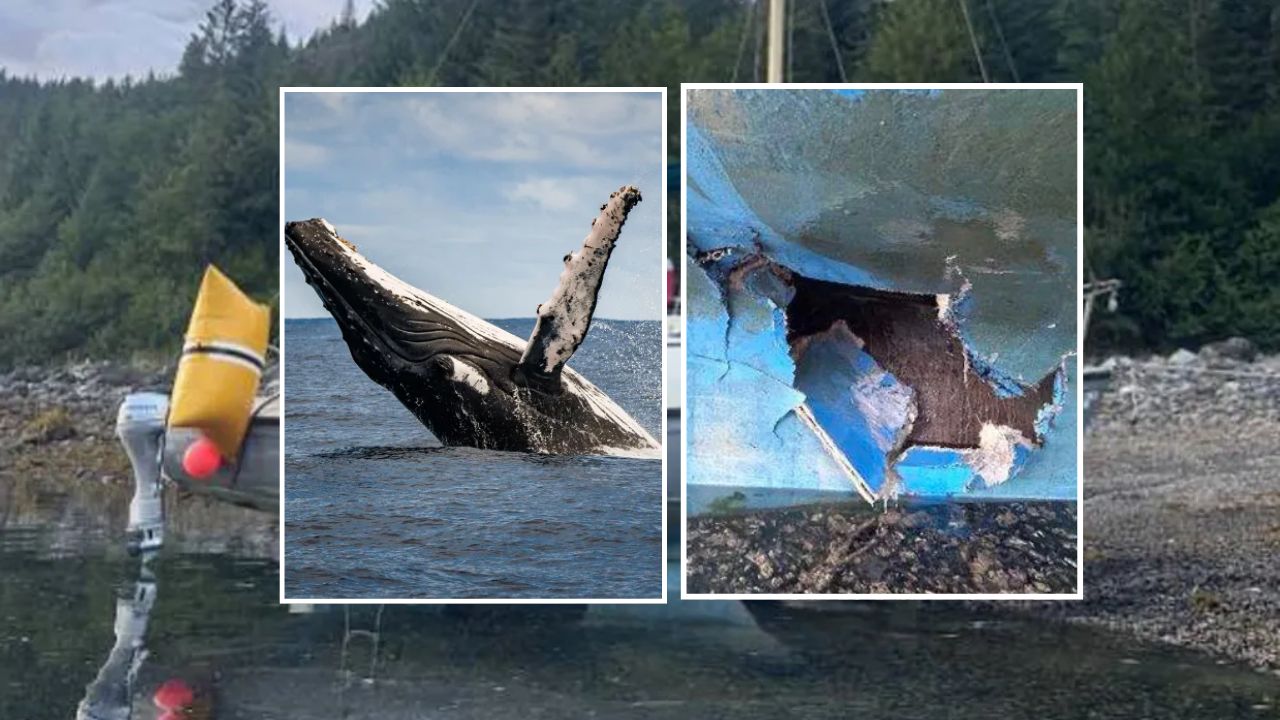
Glacier Bay, Alaska — A family sailing through Alaska’s remote Glacier Bay National Park found themselves fighting for survival in the middle of the night after an apparent collision with a humpback whale sent their 25-foot sailboat to the bottom of the water in just minutes.
Tania Lewis, her husband Eric and their 23-year-old child, Lu, were aboard the S/V Windrush on July 29 when a sudden impact shattered what had been a peaceful evening in one of Alaska’s most spectacular wilderness areas.
Family Had Enjoyed a Quiet Evening Before the Collision
The family had spent the day sailing through Glacier Bay and hiking near Reid Glacier before anchoring near Gloomy Knob for the night.
Earlier in the evening, they had watched a humpback whale feeding nearby. Eventually, however, the whale disappeared from the cove.
The family settled in for the night, enjoying dinner and even watching a wolf on the beach.
Tania and Eric eventually went to sleep while Lu remained awake reading inside the cabin. Then, at approximately 11:30 p.m., Lu heard an enormous crash.
Tania later recalled that her husband and she had been asleep when their child heard “a giant thud” and realized something was terribly wrong.
Sailboat Began Filling With Water Almost Immediately
After being alerted by Lu, the family discovered that water was rapidly rushing into the sailboat.
The damage appeared to be severe, with water entering from beneath the area where Tania and Eric had been sleeping. The family realized they had very little time to escape.
They were unable to retrieve their life jackets before getting into the boat’s dinghy and making their way toward shore. According to the family’s account, the sailboat disappeared beneath the water roughly three minutes after the initial impact.
They reached the beach at approximately midnight, escaping the sinking vessel but finding themselves stranded in the wilderness.
Emergency Gear Helped Family Survive the Night
Once ashore, Tania relied on an emergency bag she had packed with essential supplies, including lighters and an emergency blanket.
She used pages from a paperback book to help start a fire while the family gathered dry driftwood. The fire provided warmth as they waited through the night.
Tania also attempted to contact emergency responders using both her personal radio and a Park Service radio. After several unsuccessful attempts, she managed to reach an emergency communications repeater, although the connection was poor.
Eventually, Glacier Bay rangers were notified that the family needed help.
Cruise Ship Helps Relay Their Location
Around 3 a.m., the stranded family spotted the National Geographic Quest, a small cruise ship operating in the area.
The ship’s captain was able to use a satellite phone to relay the family’s location to park rangers, helping rescuers determine where the family was waiting.
Despite making contact, the family remained on the beach for several more hours. The National Park Service finally arrived around 6:30 a.m., bringing the family to safety.
Salvage Crew Finds Evidence of Whale Strike
The family later returned to the site with a salvage crew to inspect the wreckage.
They discovered a large puncture on the starboard side of the fiberglass hull, reportedly large enough for a person to crawl through.
Inside the damaged vessel, they also found pieces of what appeared to be black, rubbery material.
Tania provided samples to whale biologist colleagues, who determined that the material came from a humpback whale. The evidence strongly supported the family’s belief that a whale had struck the sailboat.
Family Faces Costly Recovery
Tania has worked as a wildlife biologist at Glacier Bay National Park and Preserve since 2006, making the experience particularly personal given her work with wildlife and wilderness management.
A fundraiser established for the family said the sinking created more than $23,000 in recovery costs.
The family has since covered the salvage expenses, while additional money is being used to replace essential belongings, including phones and shoes.
It remains unclear whether the Windrush can be repaired because of the extensive hull damage and possible problems with its rudder system.
Despite everything, Tania said the family is recovering and gradually returning to normal life.
She also encouraged other outdoor adventurers to keep emergency equipment accessible, stay close to loved ones and respect wildlife.
What would you do if your boat suddenly sank in the middle of a remote wilderness area? Would you be prepared with enough emergency gear to survive the night? Share your thoughts in the comments below.