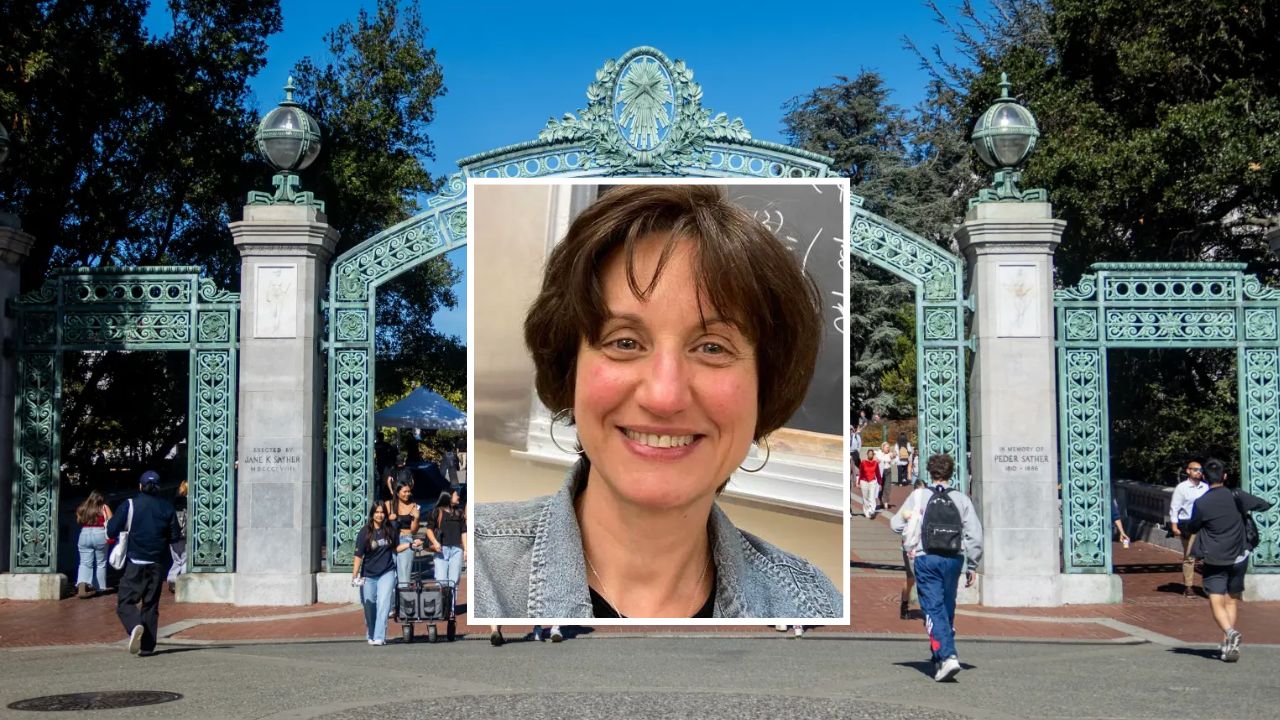
Berkeley, California — A prominent University of California, Berkeley mathematics professor is raising concerns about the academic preparation of students entering one of the nation’s most selective public universities, saying some students arrive in college years behind in basic mathematics.
Zvezdelina Stankova, a longtime Berkeley mathematics educator, described the situation in a recent opinion piece for the San Francisco Standard. She said some students entering calculus courses are struggling with concepts that should have been mastered years earlier.
“Some students are five to eight years behind in mathematics,” Stankova wrote.
She said office hours that should be devoted to advanced calculus topics such as integrals are instead becoming opportunities to teach students fractions and basic algebra.
Professor Says Calculus Students Have Widely Different Skill Levels
Stankova argued that the problem has created two dramatically different groups of students inside the same lecture hall.
One group is prepared to move into college-level calculus, while another requires extensive remedial instruction before it can understand the material being taught.
The professor said the situation is particularly concerning at Berkeley because the university remains one of the country’s most selective public institutions.
UC Berkeley’s acceptance rate has been reported at approximately 10.5%, making the academic preparation of incoming students an important issue for faculty and administrators.
Stankova questioned whether the current admissions process is adequately identifying students who are ready for the university’s demanding courses.
She described the process as being “less like careful evaluation and more like chance.”
Diagnostic Testing Shows Decline in Math Readiness
Stankova pointed to data from a diagnostic examination given to Calculus I students as evidence of what she sees as a significant decline in preparation.
According to the figures she cited, a diagnostic exam administered before 2020 found that 71% of students tested were “ready or nearly ready” to study calculus.
The numbers later changed substantially.
Between 2021 and 2023, only 44% of students tested were considered ready or nearly ready for calculus, according to the professor’s account.
She also cited results showing that by the 2022-23 academic year, more than one-third of calculus students had severe mathematics deficits, with zero reportedly being the most common score on the diagnostic exam.
The figures have fueled Stankova’s concerns that students are arriving at Berkeley without the foundational skills needed to succeed in college mathematics.
SAT and ACT Testing at Center of Debate
Stankova has connected the issue to changes in university admissions policies, particularly the removal of standardized testing.
She is among thousands of faculty members who signed open letters earlier this year calling for the SAT and ACT to be restored as part of the admissions process.
UC Berkeley moved away from standardized testing in 2020, following a broader University of California system shift that cited concerns including equity and disruptions caused by the COVID-19 pandemic.
Testing was subsequently made optional, while a court ruling required the UC system to remain test-blind through 2025.
Stankova believes the move away from standardized testing has contributed to weaker academic preparation among some incoming students.
Other Elite Universities Have Restored Testing
The debate is not limited to Berkeley.
Several highly selective universities, including Harvard, MIT, Stanford and Yale, also suspended testing requirements during the pandemic. Those institutions have since moved toward reinstating standardized testing requirements.
Stankova argues that UC Berkeley has instead “moved in the opposite direction”, leaving the university out of step with some of its elite peers.
According to her, no new admissions policy addressing the issue is expected to take effect before fall 2028. That timeline, she warned, is too slow for students currently entering college.
“Students don’t have that kind of time: They attend college once,” Stankova wrote.
Professor Has Long History of Promoting Math Education
Stankova’s criticism comes from a professor who has spent much of her career promoting mathematics education.
Originally from communist Bulgaria, she went on to earn a PhD from Harvard and become a prominent mathematics educator at Berkeley.
She also founded the Berkeley Math Circle and has worked to encourage talented young students to pursue advanced mathematics.
Her concerns therefore extend beyond a single classroom. Stankova is arguing that universities need to determine how best to ensure students are academically prepared before they reach demanding college-level courses.
The debate over standardized testing, admissions standards and educational preparation is likely to continue as universities balance academic expectations with broader admissions goals.
For Stankova, however, the immediate issue is already visible in the classroom: students who enrolled to study calculus are sometimes struggling to master fractions and basic algebra first.
Do you think universities should bring back standardized testing to help measure academic readiness, or should colleges use other methods to evaluate applicants? Share your thoughts in the comments below.