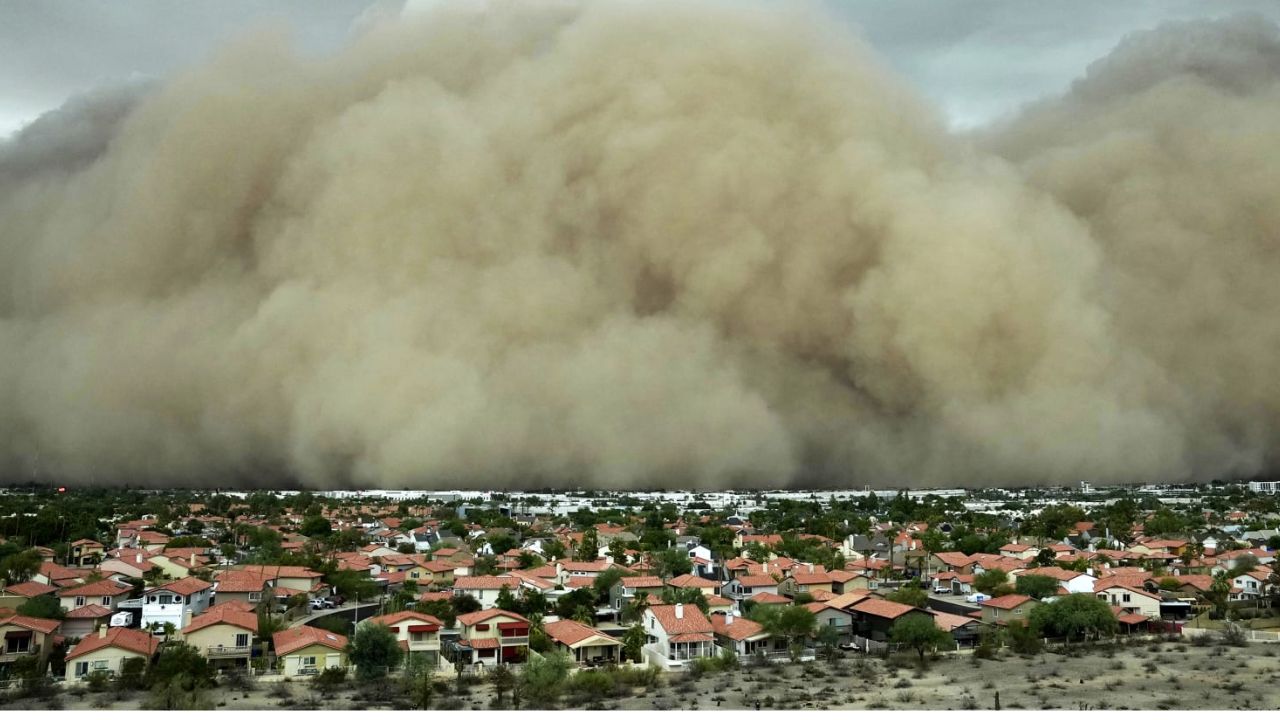
Phoenix, Arizona — A massive Category 5 dust storm swept across the Phoenix metropolitan area and parts of southwest Arizona, dramatically reducing visibility and leaving thousands of residents under unhealthy air quality conditions.
While the strongest winds have now weakened, a thick layer of dust continues to linger across the region, prompting health officials to urge people—especially those with respiratory conditions—to limit outdoor activities.
The storm developed after overnight thunderstorms on Monday generated powerful wind gusts that lifted massive amounts of desert dust into the atmosphere. The airborne dust persisted for more than 12 hours, affecting communities across central and southwest Arizona.
Dust Storm Leaves Phoenix Under Hazardous Air Conditions
Although the strongest wind gusts have subsided, the dust they carried remains suspended in the air, continuing to impact visibility and air quality throughout the region.
According to meteorologists, dust particles are much larger than smoke particles, meaning standard air quality readings used for wildfire smoke may not accurately reflect the danger posed during a dust storm.
Because of this difference, residents are encouraged to monitor dust-specific particulate matter readings, rather than relying solely on general air quality sensors.
Officials said the Phoenix metropolitan area briefly recorded the worst air quality in the country as dust concentrations remained extremely high.
Air Quality Alert Issued Across Southwest Arizona
The National Weather Service (NWS) issued an Air Quality Alert for portions of southwest Arizona due to elevated levels of PM-10, or coarse particulate matter.
These microscopic dust particles can penetrate the respiratory system and aggravate heart and lung conditions, particularly among:
- Older adults
- Children
- People with asthma or other respiratory illnesses
- Individuals with heart disease
Health officials advised vulnerable residents to remain indoors whenever possible and avoid strenuous outdoor activities until conditions improve.
Phoenix Dust Storm Scale Shows Extreme Conditions
Meteorologists continue to monitor the event using the Phoenix Dust Storm Scale, a system designed to measure the severity of dust storms.
The scale evaluates several factors, including:
- PM-10 concentrations
- Wind speed
- Storm duration
- Geographic coverage
Dust storms are ranked from Category 1 to Category 5, with Category 5 representing the most severe conditions, including dust concentrations of up to 5,000 micrograms per cubic meter.
Officials said Monday’s event reached the highest category, highlighting just how significant the storm became.
Another Dust Storm Could Develop Overnight
Forecasters say conditions are expected to gradually improve later in the evening as cooler temperatures help the atmosphere mix more efficiently, allowing dust to disperse.
However, weather officials are also monitoring the possibility of another round of thunderstorms capable of producing additional blowing dust overnight.
Even if another major dust storm does not develop, unhealthy air quality may persist in some neighborhoods until the remaining dust settles.
Residents are encouraged to continue checking official weather updates before spending extended time outdoors.
Safety Officials Urge Residents to Stay Indoors During Dust Storms
Dust storms in Arizona typically last from several minutes to about an hour, although lingering airborne dust can continue affecting air quality long after the strongest winds have ended.
Officials recommend staying indoors whenever possible during a dust storm, keeping windows and doors closed, and following updates from the National Weather Service and local emergency officials.
Drivers are also reminded to avoid traveling through areas of blowing dust, as rapidly changing visibility can create dangerous road conditions.
Have you ever experienced a major dust storm in Arizona or another desert region? What precautions do you take to stay safe during poor air quality events? Share your thoughts in the comments below.