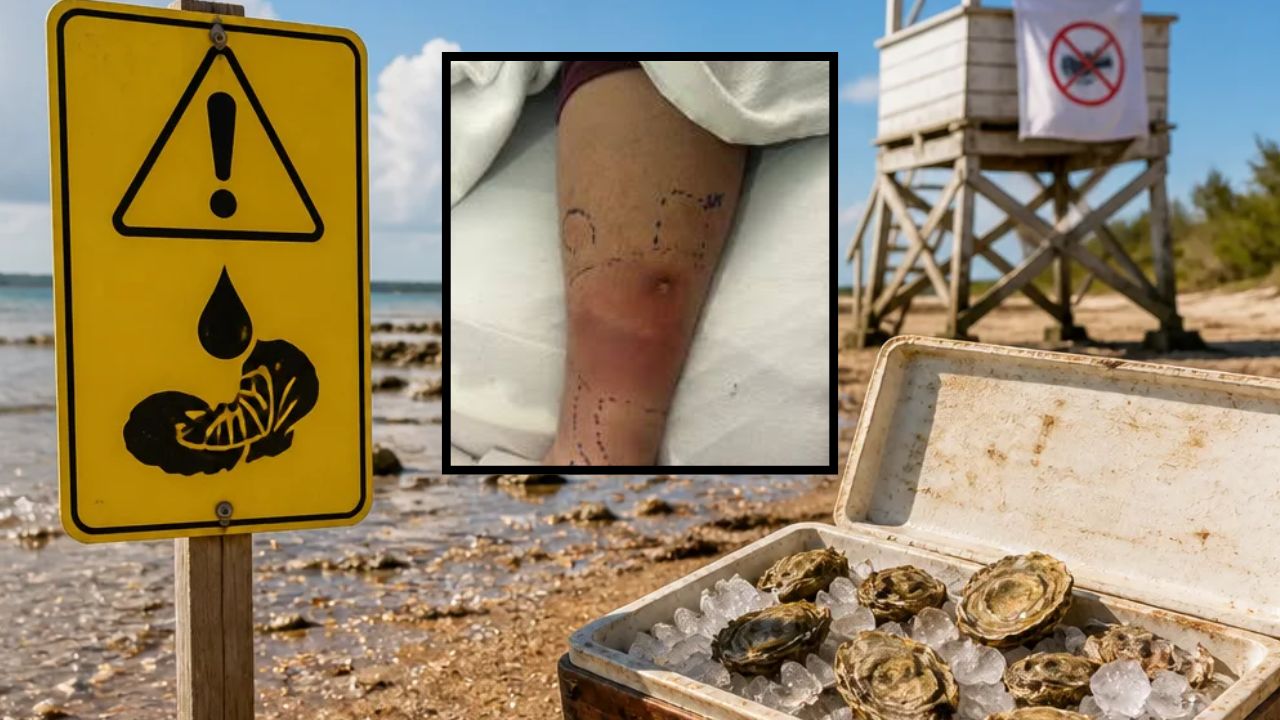
Baton Rouge, Louisiana — Health officials are urging people to use extra caution around Gulf Coast waters this summer as potentially deadly Vibrio vulnificus infections continue to raise concerns in Louisiana. The bacteria can cause severe illness when it enters the body through an open wound or after someone consumes contaminated raw or undercooked seafood.
Louisiana health officials say infections are especially concerning during the warmer months, when conditions become favorable for Vibrio bacteria to multiply in coastal waters. State guidance notes that these bacteria are naturally present in coastal environments and become more prevalent between May and October.
Louisiana Reports Serious Vibrio Infections
According to the figures provided by Louisiana health officials, the state has recorded nine Vibrio vulnificus infections and five deaths this year.
The numbers underscore why officials are urging beachgoers and seafood consumers to take precautions. While Vibrio infections are relatively uncommon, Vibrio vulnificus can become severe and life-threatening, particularly when it enters the bloodstream or causes a serious wound infection.
Louisiana previously reported an unusually high number of cases in 2025. By September of that year, the state had recorded 26 cases and five deaths, with most patients reporting exposure to coastal water through a wound.
Gulf Waters Create Ideal Conditions for Bacteria
Vibrio bacteria naturally occur in saltwater and brackish water, where freshwater and seawater mix.
Warm summer temperatures create conditions that allow the bacteria to thrive, which is why infections are more commonly reported during the warmer months.
The bacteria are particularly concerning along the Gulf Coast, where warm coastal waters provide an environment where Vibrio can multiply.
The most dangerous species, Vibrio vulnificus, has a significantly higher fatality rate than many other Vibrio infections. Health officials estimate that approximately one in five people infected with V. vulnificus die, sometimes after becoming seriously ill within a very short period.
Small Cuts Can Become a Serious Problem
Beachgoers do not necessarily need to swallow contaminated water to become infected.
Vibrio vulnificus can enter the body through cuts, scrapes and other breaks in the skin when a person enters contaminated coastal or brackish water.
That means even a small wound that appears insignificant can potentially provide an entry point for bacteria. People should thoroughly wash cuts and scrapes with soap and clean running water after exposure to coastal water.
Health officials also recommend seeking medical attention promptly if an exposed wound becomes red, swollen, painful, warm or discolored.
Anyone experiencing concerning symptoms should tell their healthcare provider about their recent exposure to saltwater or brackish water.
Some People Face Greater Risk
Although anyone can become infected, severe illness is more common among people with certain underlying conditions. Those at increased risk include people with liver disease, diabetes, weakened immune systems and certain chronic illnesses.
Louisiana health officials have previously noted that many patients with serious Vibrio infections have underlying health conditions.
For people at higher risk, avoiding exposure to coastal water when they have an open wound may be especially important.
Raw Oysters Also Carry a Risk
Vibrio vulnificus infections can also occur after eating raw or undercooked shellfish, particularly oysters. One important warning is that contaminated oysters cannot be identified simply by looking at them.
People handling raw shellfish should wash their hands thoroughly afterward. Those at increased risk of severe infection may also want to use protective gloves when handling raw shellfish.
Health officials recommend following proper cooking instructions for oysters, clams, mussels and other shellfish and discarding shellfish with open shells before cooking.
Climate Change May Be Expanding the Bacteria’s Range
Scientists are also studying how rising temperatures and changing environmental conditions could affect Vibrio bacteria.
Research has suggested that infections historically associated with warmer southern waters are appearing farther north as coastal waters warm.
For Gulf Coast residents and summer visitors, however, the immediate message from health officials is straightforward: protect open wounds, handle seafood carefully and seek medical care quickly when concerning symptoms appear after water exposure.
Louisiana’s beach monitoring program also continues to publish advisories for individual coastal sites, meaning conditions can vary from one location to another.
Have you ever heard of Vibrio vulnificus before? Would a warning like this change how you approach swimming or eating raw oysters this summer? Share your thoughts in the comments below.