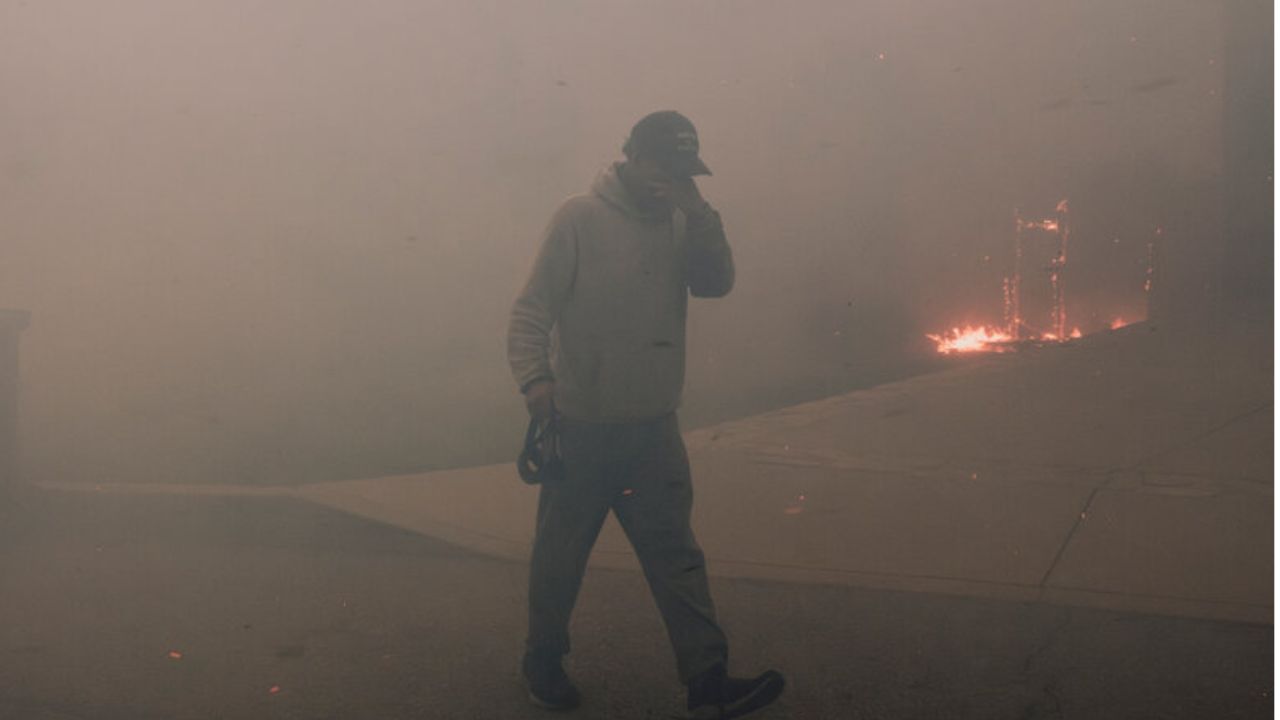
Spokane, Washington — Wildfire danger remains at very high levels across the Pacific Northwest this week as hot temperatures, dry vegetation, gusty winds and ongoing drought conditions continue creating an environment where fires can spread rapidly. Authorities are also warning that thick wildfire smoke will worsen air quality for millions of residents across Washington, Oregon and neighboring regions as firefighters battle multiple large blazes.
With another round of extreme heat expected later this week, forecasters say the fire threat is unlikely to ease anytime soon.
Old Trails Fire Prompts Evacuations as Wildfires Continue to Grow
Several significant wildfires have erupted across the Northwest in recent days, including the Old Trails Fire near Spokane, Washington, where officials have issued evacuation orders for nearby communities.
Although meteorologists expect winds to weaken slightly over the next few days, they caution that fire conditions will remain dangerous because the landscape is exceptionally dry after prolonged drought.
A moderate wildfire risk also extends eastward into portions of the northern Plains, where weather conditions remain favorable for rapid fire growth.
Officials continue urging residents in high-risk areas to stay alert for changing fire conditions and follow evacuation instructions if they are issued.
Dry Vegetation and Lightning Could Spark More Fires
Forecasters say very dry vegetation combined with ongoing drought is allowing existing wildfires to spread quickly across forests and grasslands.
Adding to the concern, parts of the Northwest could experience dry thunderstorms, which produce lightning with little or no rainfall.
These storms can ignite new wildfires while providing almost no moisture to slow or extinguish the flames, increasing the risk of additional fire starts throughout the region.
Emergency officials continue to monitor weather conditions closely as crews work to contain dozens of active fires.
Smoke Creates Hazardous Air Quality Across the Region
As wildfires continue burning across Washington, Oregon and parts of British Columbia, massive plumes of smoke are drifting across the Pacific Northwest.
The smoke is causing poor air quality and hazy skies in several major cities, including Seattle and Portland, where air quality alerts remain in effect.
Forecasters noted that some higher-level smoke could also drift into parts of the Plains later this week.
While that smoke is expected to produce vivid sunrises and sunsets, it is not anticipated to significantly reduce air quality as it does closer to the active wildfire zones.
Heat Dome Expected to Increase Fire Risk Again
Meteorologists say a strengthening high-pressure system, commonly known as a heat dome, will build across the Rockies later this week.
As the system intensifies, temperatures are expected to climb back into the 90s across much of the Northwest, further drying vegetation and increasing wildfire danger.
While coastal communities are expected to remain relatively cooler, inland areas could experience another stretch of intense summer heat.
The combination of high temperatures, low humidity and dry fuels is expected to keep fire conditions elevated throughout the week.
Drought Expected to Keep Wildfire Threat Elevated
Looking ahead, forecasters expect mostly dry weather to continue into the middle of the month.
Without widespread rainfall, drought conditions are likely to worsen, allowing wildfire danger to remain elevated across much of the Pacific Northwest.
Fire officials continue urging residents to avoid activities that could accidentally ignite fires and to remain aware of local emergency alerts as weather conditions evolve.
With multiple large fires already burning and more extreme heat on the way, authorities warn that the wildfire season is far from over.
Do you live in an area affected by wildfire smoke or extreme heat? Share how conditions are impacting your community in the comments below.