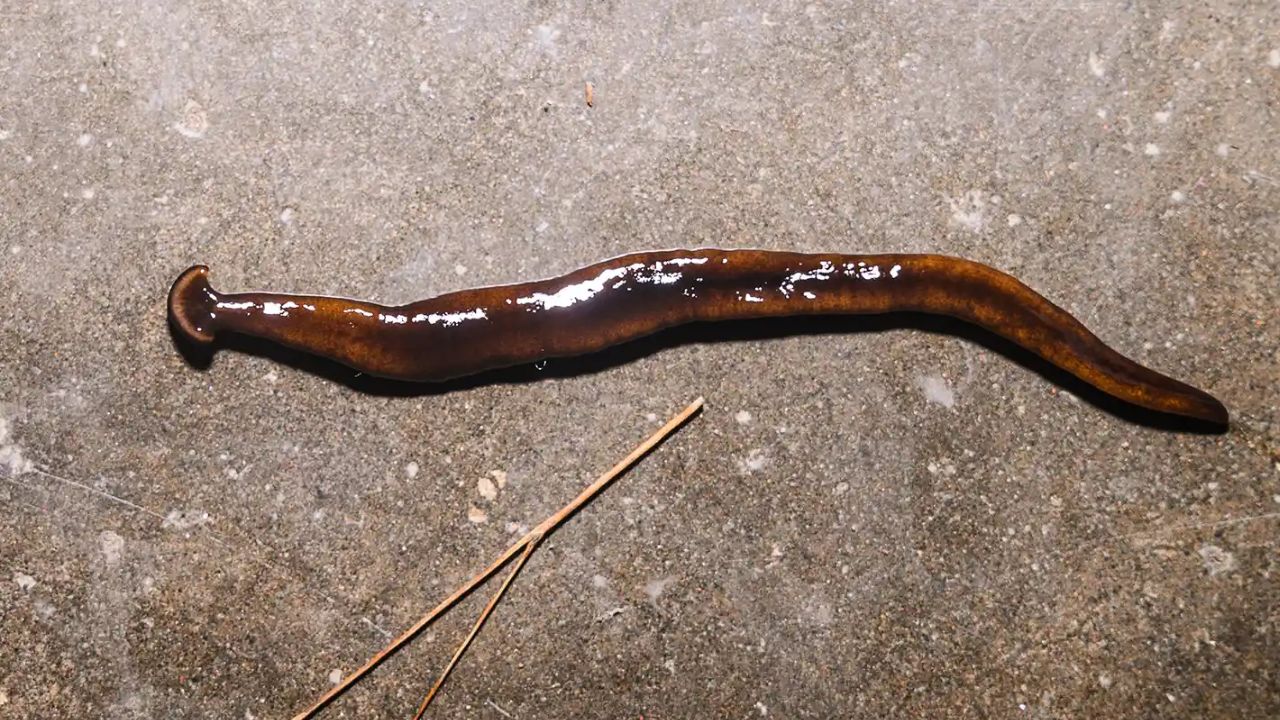
Tennessee — Residents are being urged to keep their distance from a strange invasive worm that has been appearing in more parts of the state. Officials are warning people not only to avoid touching hammerhead worms with bare hands, but also to resist a seemingly simple way of getting rid of them: cutting them apart.
The unusual flatworms have become a growing concern because of their potential impact on local ecosystems and their ability to regenerate under certain circumstances.
Tennessee Officials Warn Residents About Hammerhead Worms
The Tennessee Department of Finance and Administration issued a warning on Saturday, Aug. 8, telling residents to think twice before picking up an unfamiliar worm.
Officials advised people who encounter a hammerhead worm to avoid direct contact because some of these invasive flatworms can release substances that may irritate the skin.
The Tennessee Department of Agriculture’s Division of Forestry had already reported an increase in sightings in July, saying officials were receiving more reports of hammerhead worms across Tennessee.
The warnings are particularly relevant for people working in gardens, landscaping areas and yards where the worms can sometimes be discovered.
Cutting the Worm Could Make the Problem Worse
One of the most unusual warnings from officials involves how people attempt to kill the worms. Residents are specifically advised not to cut hammerhead worms into pieces.
That’s because some species have the ability to regenerate after being divided. Instead of eliminating the pest, cutting it could potentially result in additional worms.
The unusual survival ability is one reason officials recommend using other methods to safely dispose of the animals. People who encounter one should use gloves or a stick to move it into a sealed bag or container.
Officials have also recommended covering the worm with salt, rubbing alcohol, or a citrus oil and vinegar mixture applied directly to it.
Invasive Worms Can Threaten Native Earthworms
The concern isn’t limited to whether the worms can irritate human skin. Hammerhead worms are also predators of native earthworms, which play an important role in healthy soil.
Earthworms help with soil aeration, decomposition and nutrient cycling. Losing large numbers of native earthworms could therefore affect gardens and surrounding ecosystems.
Tennessee forestry officials emphasized that fewer earthworms can mean less aeration, less decomposition and less nutrient cycling.
That makes the spread of hammerhead worms an environmental concern, particularly in areas where native earthworm populations are important to soil health.
What Do Hammerhead Worms Look Like?
Hammerhead worms are distinctive because of their long, flattened bodies and unusual half-moon-shaped heads. They are commonly brown or gray and may have stripes running along their bodies.
The species originated in Southeast Asia and is believed to have arrived in the United States through infested soil more than a century ago.
They are now found in various parts of the country, where environmental conditions can allow certain species to survive and spread.
Experts Say Serious Human Harm Is Unlikely
Despite the alarming warnings, experts say people should not panic when they encounter a hammerhead worm.
Not every hammerhead worm species produces toxins, and entomologists have noted that the likelihood of one causing serious harm to a person or animal is low.
Potential exposure becomes more concerning if the worm’s mucus gets into the eyes or mouth. The safest approach is therefore simple: don’t handle the worm directly.
How Residents Can Help Prevent Their Spread
Officials are also asking Tennessee residents to take precautions before bringing new plants or landscaping materials into their yards.
One recommendation is to inspect new plants and soil carefully before adding them to gardens. This can help reduce the chance of accidentally introducing invasive worms into new areas.
If residents spot a suspected hammerhead worm, officials recommend taking a photograph and reporting the sighting to the Tennessee Department of Agriculture.
The warning serves as a reminder that even an unusual-looking worm in a backyard can have consequences for the surrounding ecosystem — and that trying to eliminate it the wrong way could potentially make the problem worse.
Have you ever spotted a hammerhead worm in your yard or garden? Would you recognize one if you saw it? Share your experience in the comments below.