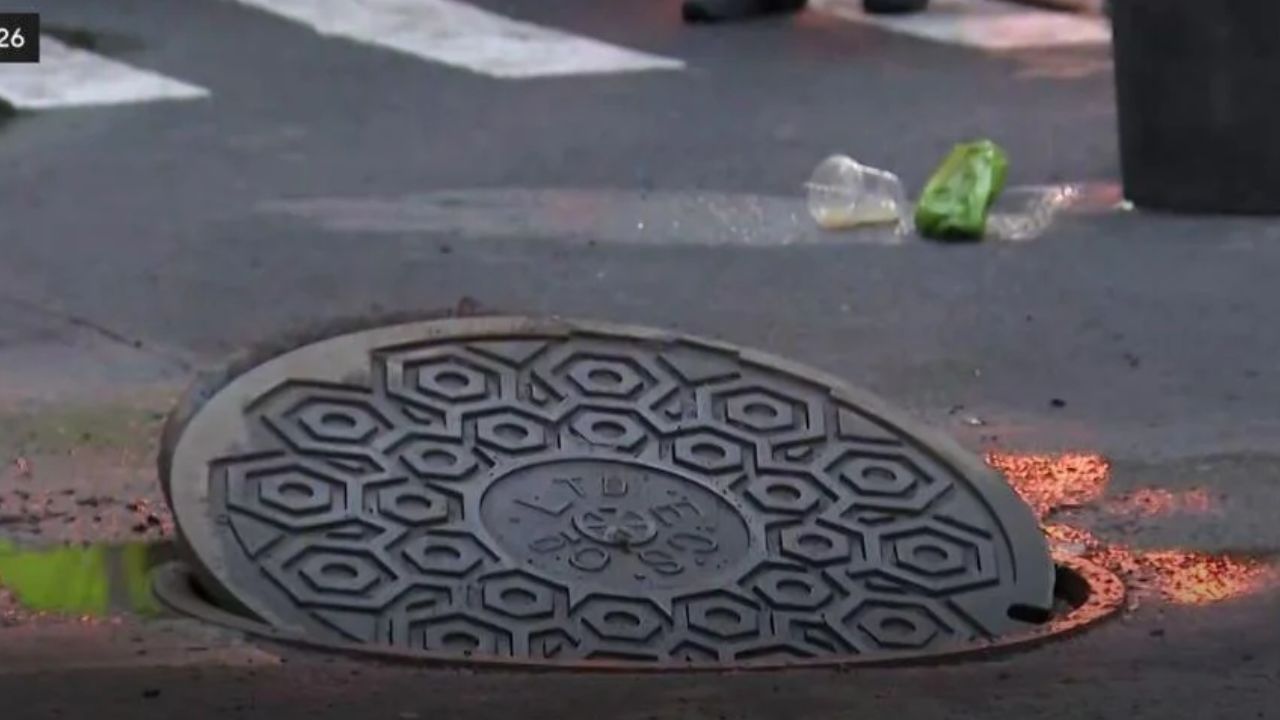
New York City, New York — New York City is on track to record its highest number of manhole fires and smoking manholes in more than a decade, according to newly released city data, raising fresh concerns about aging infrastructure and public safety.
With thousands of emergency responses already logged this year, officials and residents are questioning whether enough is being done to prevent dangerous underground electrical incidents.
Emergency Responses Have Increased Dramatically
Data from New York City Open Data shows the FDNY has already responded to more than 4,000 reports involving fire, smoke, or explosions from manholes so far this year.
The increase has been steady over the past several years.
In 2023, firefighters responded to approximately 1,300 manhole fire incidents. That number rose to 2,800 in 2024 before climbing again to 4,400 in 2025.
Based on the current pace, 2026 is expected to record the highest number of manhole-related emergency responses since 2015, marking a dramatic increase in underground electrical incidents across the city.
Con Edison Points to Salt and Extreme Weather
Con Edison, which owns most of New York City’s electrical manholes, says road salt used during winter storms is one of the leading causes of these incidents.
According to the utility, salt gradually corrodes underground electrical cables, increasing the likelihood of smoke, fires, and occasional explosions.
City officials spread approximately 1 billion pounds of road salt during last winter’s severe snow and ice season—the harshest winter conditions New York has experienced since 2015.
The company also noted that recent heatwaves have placed additional strain on the electrical system by increasing demand for electricity.
In a written statement, Con Edison emphasized that fewer than 1% of its roughly 268,000 manholes require emergency responses each year, adding that many of those calls involve smoking manholes without visible flames.
Recent Explosions Have Raised Public Safety Concerns
Several high-profile incidents have renewed concerns about the dangers posed by failing underground electrical infrastructure.
In February, two children suffered minor burns after a manhole explosion in Tribeca.
Earlier, on July 9, an underground explosion near Broadway and West Third Street sent heavy metal manhole covers flying into the air.
Witness Parker Voss said he was standing only about 10 feet away when the explosion occurred. He described the blast as sounding “like a building had collapsed.”
Security footage reportedly showed the airborne manhole covers narrowly missing pedestrians walking nearby.
Voss later sought medical treatment after experiencing hearing loss, ear pain, and balance issues, saying the incident left him feeling shaken long after the explosion.
Officials Call for Greater Accountability
State Senator John Liu said the increasing number of incidents highlights the need for stronger action.
He pointed to aging infrastructure as one likely cause while urging additional safety improvements.
Liu also said he has previously proposed higher financial penalties for Con Edison whenever serious manhole incidents occur, arguing that stronger accountability could encourage faster infrastructure upgrades.
Utility Says Safety Improvements Are Underway
Con Edison says it has already invested in several technologies designed to reduce underground electrical failures.
Those measures include stronger electrical cables, thermal imaging cameras, grated manhole covers, and specialized locking latches installed on approximately 3,300 manhole covers to help prevent them from becoming airborne during explosions.
However, the utility declined to say whether those safety features were installed at the location of the July 9 explosion.
Meanwhile, New York State says its primary focus remains requiring utilities to continue making safety investments, although regulators also retain the authority to issue fines if violations are identified.
Do you think aging infrastructure should become a higher priority for cities across the U.S.? Share your thoughts on how public utilities can better protect communities in the comments below.